
Join the Dysregulation Insider get free calm parenting tips straight to your inbox!
YES, I'M IN!The Medical Mystery Behind Your Child’s Dysregulation, OCD, and Anxiety | Emotional Dysregulation in Children | E310




Estimated Reading Time: 7 Minutes
Many families spend years trying therapy, medications, behavior plans, and parenting strategies without fully understanding what's driving their child's struggles. That's because symptoms like emotional dysregulation, OCD, anxiety, aggression, shutdowns, and sensory challenges can sometimes be signs of deeper biological issues affecting the brain and nervous system.
In this episode, I explain some of the most commonly overlooked medical contributors to dysregulation and why finding the root cause can completely change a child's trajectory.
Because when we calm the brain first and address what's happening underneath the behavior, healing becomes possible.
Why is my child suddenly struggling with dysregulation, OCD, or anxiety?
One of the biggest mistakes families make is assuming behavior exists in isolation.
Behavior is communication.
And sometimes what it's communicating is a medical issue.
Many children who struggle with:
- OCD
- Anxiety
- Rage
- Emotional outbursts
- School refusal
- Sensory sensitivities
- Shutdowns
are dealing with nervous system dysregulation driven by underlying biological factors.
Common Hidden Contributors
- Neuroinflammation
- Chronic infections
- Autoimmune conditions
- Toxic load
- Nutritional deficiencies
- Birth trauma
- Brain injury
- Mitochondrial dysfunction
- Genetic vulnerabilities
This is why symptoms often don't respond to traditional behavioral approaches alone.
The nervous system is asking for deeper support.
How does neuroinflammation affect behavior?
One of the most overlooked drivers of emotional dysregulation is inflammation affecting the brain and nervous system.
When inflammation increases, children may experience:
- OCD symptoms
- Anxiety
- Mood changes
- Rage episodes
- Tics
- Sleep disturbances
- Cognitive challenges
PANS and PANDAS
As a PANS mom, I know firsthand how dramatic these changes can be.
Many parents describe it the same way:
"My child was fine one day, and then everything changed."
Children who were already somewhat anxious, sensitive, or neurodivergent may suddenly develop:
- OCD
- Tics
- Severe anxiety
- Aggression
- Emotional regression
- School refusal
These changes are often linked to infections that trigger inflammation in the brain.
Important Reminder
PANS is a clinical diagnosis.
There isn't one single test that confirms it.
That's why finding knowledgeable providers matters so much.
Could toxic load and mitochondrial dysfunction be affecting my child?
The brain requires enormous amounts of energy.
That energy comes from tiny structures called mitochondria.
When mitochondrial function becomes impaired, children often struggle with regulation.
Signs of Mitochondrial Dysfunction
- Fatigue
- Hyperactivity
- Brain fog
- Emotional dysregulation
- Poor stress tolerance
- Learning challenges
Children with:
- Autism
- Hypermobility
- Chronic illness
- Neurodevelopmental differences
often have higher energy demands.
Some children appear hyperactive because their nervous systems are working overtime.
Others become exhausted because their systems can't keep up.
Supporting Cellular Energy
Many families benefit from:
- Improved nutrition
- Protein-rich diets
- Mitochondrial support strategies
- Nervous system regulation
When energy production improves, regulation often improves too.
What role do birth trauma and brain injury play?
Birth trauma and mild brain injuries are frequently overlooked contributors to dysregulation.
Many people assume brain injuries only occur after major accidents.
That's simply not true.
Brain Injury Doesn't Always Look Obvious
Even subtle injuries can affect:
- Emotional regulation
- Learning
- Sensory processing
- Behavior
- Executive functioning
Children may later be diagnosed with:
- ADHD
- Anxiety
- Autism-like symptoms
- Mood disorders
without anyone exploring whether a brain injury contributed to the changes.
Why Brain Mapping Matters
One of the most effective tools I use is QEEG brain mapping.
Brain mapping allows us to see:
- Overactive brain regions
- Underactive brain regions
- Stress patterns
- Attention challenges
- Regulation difficulties
This helps us move beyond symptom management and identify what the brain actually needs.
🗣️ "These kids aren't broken; they're overwhelmed. When we calm the brain first and address the root causes, everything changes." — Dr. Roseann
If your child's symptoms feel confusing, overwhelming, or resistant to treatment, you're not alone.
The Regulation Rescue Kit gives you practical Regulation First Parenting® tools to help calm the nervous system and support emotional regulation. Become a Dysregulation Insider VIP and get your FREE kit today: www.drroseann.com/newsletter
How does functional medicine help children with dysregulation?
Traditional treatment often focuses on symptoms.
Functional medicine focuses on root causes.
Instead of asking:
"How do we stop this behavior?"
Functional medicine asks:
"Why is this behavior happening?"
Areas Often Investigated
- Infections
- Mold exposure
- Toxins
- Gut health
- Nutrition
- Immune function
- Inflammation
- Environmental triggers
This approach doesn't replace emotional support.
It expands the investigation.
Real-Life Example
Many families come to me after years of therapy and medication with limited results.
Once we uncover hidden infections, toxic load, neuroinflammation, or nervous system dysfunction, the treatment plan becomes much more effective.
The behavior finally starts making sense.
Why does regulation have to come first?
Regardless of the underlying cause, the nervous system is always involved.
A dysregulated nervous system struggles with:
- Emotional control
- Focus
- Learning
- Relationships
- Flexibility
That's why Regulation First Parenting® focuses on calming the brain first.
What Helps Regulate the Nervous System?
Many families benefit from:
- Neurofeedback
- PEMF
- Brain mapping
- Nutritional support
- Co-regulation
- Sleep optimization
- Stress reduction strategies
These interventions help create the conditions where healing can occur.
Real-Life Example
I've worked with children who were told they would never improve.
Some were recommended for institutional placement.
Others had exhausted every available intervention.
Once we addressed the underlying drivers and regulated the nervous system, those same children began thriving.
That's what's possible when we stop chasing symptoms and start looking for causes.
Takeaway & What’s Next
When children struggle with OCD, anxiety, rage, sensory issues, or emotional dysregulation, it's easy to assume the behavior itself is the problem.
Often, it's not.
Behavior is communication.
And sometimes that communication points to deeper medical contributors that deserve attention.
Your child isn't giving you a hard time.
They're having a hard time.
The goal isn't just managing symptoms.
The goal is understanding what's driving them.
When we calm the brain first and address root causes, we create the possibility for lasting change.
It's gonna be OK.
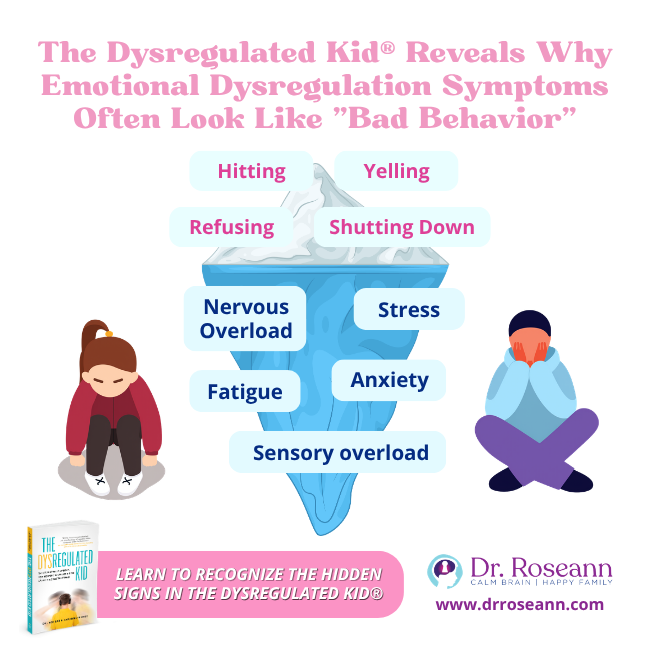
When OCD, anxiety, and severe dysregulation appear together—especially when symptoms change suddenly or don’t fit the usual picture—parents need to keep asking what may be underneath. Behavior is a signal, not a diagnosis. In The Dysregulated Kid®, I teach parents to look at the whole child and recognize patterns across the brain, body, nervous system, emotions, and behavior. That doesn’t replace medical or mental health evaluation; it helps you become a more informed observer and advocate while giving you practical Regulation First Parenting® tools for the difficult moments happening at home. Get The Dysregulated Kid® at dysregulatedkid.com.
FAQs
Can infections cause OCD and anxiety symptoms in children?
Yes. Conditions such as PANS and PANDAS can trigger sudden-onset OCD, anxiety, emotional dysregulation, and behavioral changes following infections.
What is neuroinflammation?
Neuroinflammation refers to inflammation affecting the brain and nervous system. It can contribute to anxiety, OCD, mood changes, cognitive difficulties, and emotional dysregulation.
Can brain injuries affect behavior years later?
Absolutely. Even mild brain injuries can affect emotional regulation, sensory processing, attention, and learning long after the original injury occurred.
What is QEEG brain mapping?
QEEG brain mapping is a non-invasive assessment that measures brainwave activity and helps identify patterns contributing to dysregulation and behavioral challenges.
How do I know if my child's behavior has a medical cause?
Rapid changes, treatment resistance, sudden onset symptoms, OCD, anxiety, rage, or regression can all be clues that deeper biological factors deserve investigation.
Not sure where to start?
The Solution Matcher helps identify the next best step based on your child's symptoms, behaviors, and nervous system needs.
Start here:
Dr. Roseann Capanna-Hodge is a licensed therapist, certified school psychologist, and leading expert in emotional dysregulation in children. With over 30 years of experience, she helps parents understand the root causes of meltdowns, anxiety, ADHD, and challenging behavior through the lens of nervous system regulation. Dr. Roseann teaches practical, science-backed strategies for co-regulation and how to calm a dysregulated child using her Regulation First Parenting® approach. She is the host of the Dysregulated Kids Podcast and author of The Dysregulated Kid.
Dr. Roseann Capanna-Hodge
Emotional Dysregulation in Children & Nervous System Expert
Regulation First Parenting® | CALMS Protocol™
Host of the Dysregulated Kids Podcast (Top 1% Globally)
Author of The Dysregulated Kid

Find this helpful? Leave us a review!
Your feedback helps more overwhelmed parents find calm, clarity, and the proven tools that make everyday life easier.
Dr. Roseann Capanna-Hodge: Helping Families of Dysregulated Kids Thrive Through Regulation First Parenting®
As the creator of Regulation First Parenting®, she’s helping families of dysregulated kids discover a compassionate, brain-based path forward. Through The Dysregulated Kids™ Podcast (top 2% globally), she offers practical strategies that help parents understand their child’s brain and support lasting change.
Through The Global Institute of Children’s Mental Health and Dr. Roseann, LLC, she’s created resources like the Neurotastic® Brain Formulas and the Regulation First Parenting® framework—meeting families where they are and supporting them through challenges like ADHD, anxiety, OCD, PANS/PANDAS, and behavioral struggles.
Recognized by Forbes as “a thought leader in children’s mental health,” Dr. Roseann is changing how we understand emotional dysregulation in children—one family at a time.