

Join the Dysregulation Insider get free calm parenting tips straight to your inbox!
YES, I'M IN!When Should I Consider Non-Medication Approaches Over Traditional Medication? | Nervous System Regulation | E273





Estimated Reading Time: 7 Minutes
Some parents worry they're waiting too long to consider medication.
Others worry they're moving toward medication too quickly.
The truth is that there is no one-size-fits-all answer.
The most important question isn't:
It's:
"What's driving my child's symptoms?"
Because when we understand the root cause, we can make better decisions about treatment.
In this episode, I explain when non-medication approaches may be worth considering, why nervous system regulation is foundational, and how families can make informed choices that align with their child's unique needs.
When should parents consider non-medication approaches?
One of the biggest misconceptions in children's mental health is that medication should automatically be the first step.
In many situations, it shouldn't be.
Children's brains are still developing.
The prefrontal cortex—the part of the brain responsible for emotional regulation, decision-making, and impulse control—continues developing well into young adulthood.
That's why understanding the nervous system matters so much.
Good Reasons to Explore Non-Medication Approaches
You may want to consider non-medication options if:
- Symptoms are mild to moderate
- You haven't explored other interventions yet
- You're concerned about medication side effects
- You want to understand root causes first
- Your family prefers a holistic approach
- Traditional interventions haven't worked
The Goal
The goal isn't avoiding medication at all costs.
The goal is making informed decisions.
Medication may help some children.
But it rarely addresses the root causes of dysregulation.
Why is nervous system regulation so important?
One thing I've learned after working with thousands of families is that healing becomes much harder when the nervous system remains dysregulated.
A dysregulated nervous system affects:
- Attention
- Emotional regulation
- Learning
- Behavior
- Sleep
- Mental health
What Happens During Dysregulation?
Children may become:
- Anxious
- Impulsive
- Reactive
- Emotionally overwhelmed
- Unable to focus
Until the nervous system is regulated, many therapies and interventions don't work as effectively.
That's why Regulation First Parenting® starts with calming the brain.
Real-Life Example
A child struggles with attention, anxiety, and emotional outbursts.
Parents focus exclusively on behavior.
Nothing changes.
Once nervous system regulation becomes part of the plan, the child's ability to learn new skills improves dramatically.
Behavior is communication.
And often the nervous system is communicating that it needs support.
What family factors should be addressed first?
One of the biggest mistakes families make is focusing exclusively on the child.
Children don't exist in isolation.
They live within family systems.
Family Dysregulation Matters
Parents often ask:
"What should we do for our child?"
Sometimes the better question is:
"What does the whole family need?"
When families are chronically stressed, overwhelmed, or reactive, children's symptoms often worsen.
Real-Life Example
In my book, I share stories of families where anger, stress, and dysregulation affected everyone.
The parents believed the child was the problem.
In reality, the entire family system needed support.
Addressing family regulation doesn't mean parents are failing.
It means everyone deserves help.
🗣️ "Medication doesn't address root causes. That's why I love non-medication approaches—they focus on what's driving the behavior underneath the symptoms." — Dr. Roseann
Need help calming your child's nervous system?
The Regulation Rescue Kit provides practical Regulation First Parenting® strategies that help reduce emotional dysregulation, improve behavior, and create more peace at home. Become a Dysregulation Insider VIP and get your FREE kit: www.drroseann.com/newsletter
What non-medication approaches have research support?
There are many options available, but not all approaches are created equal.
Nutrition and Diet
What children eat affects:
- Mood
- Attention
- Energy
- Emotional regulation
Start small.
Parents often become overwhelmed trying to change everything at once.
Choose one improvement and build from there.
Neurofeedback
Neurofeedback helps train the brain toward healthier patterns of functioning.
Research supports its use for:
- ADHD
- Anxiety
- Emotional regulation
- Attention challenges
Provider expertise matters.
Always work with qualified professionals.
PEMF (Pulsed Electromagnetic Field Therapy)
PEMF supports:
- Nervous system regulation
- Recovery
- Stress reduction
- Inflammation management
Many families find it helpful as part of a broader regulation plan.
Mindfulness and Relaxation
Simple practices such as:
- Deep breathing
- Prayer
- Meditation
- Grounding exercises
help regulate the nervous system and improve stress resilience.
Therapy
Therapy remains an important component of care.
Effective therapy often includes:
- Parent involvement
- Skill building
- Emotional regulation support
- Family guidance
Real change happens at home, not just during appointments.
Can non-medication approaches be combined with medication?
Absolutely.
This isn't an either-or conversation.
Many families use a combination of approaches.
Why Collaboration Matters
If medication is part of your child's treatment plan:
- Keep providers informed
- Encourage collaboration
- Share progress
- Monitor changes
Children benefit when professionals work together.
Important Reminder
Medication may help reduce symptoms.
Regulation helps create lasting change.
The two can coexist.
Real-Life Example
Many families begin with medication because symptoms are severe.
As regulation improves through neurofeedback, therapy, nutrition, and nervous system support, some children require less medication over time.
Every child is different.
Why do small changes matter?
Parents often feel discouraged because they want immediate results.
The reality is that meaningful change happens through consistent effort.
Examples of Small Shifts
- Improving sleep
- Adding protein to breakfast
- Reducing screen time
- Practicing breathing exercises
- Supporting nervous system regulation
These changes may seem small.
But they add up.
The Power of Consistency
The nervous system changes through repetition.
Not perfection.
Consistency matters more than intensity.
Takeaway & What’s Next
If you're wondering whether non-medication approaches are worth exploring, the answer is often yes.
Not because medication is bad.
But because understanding root causes matters.
Your child isn't giving you a hard time.
They're having a hard time.
And when we focus on nervous system regulation, emotional health, family dynamics, and root causes, we create opportunities for lasting change.
Remember:
- Calm the brain first.
- Address root causes.
- Support the nervous system.
- Take small consistent steps.
It's gonna be OK.
FAQs
When should I consider non-medication approaches?
Non-medication approaches may be appropriate when symptoms are mild to moderate, when root causes haven't been explored, or when families want to begin with the least restrictive interventions.
Can non-medication approaches help ADHD?
Many children with ADHD benefit from interventions such as neurofeedback, nervous system regulation, nutrition support, behavioral strategies, and parent coaching.
Is medication ever necessary?
For some children, medication may be helpful or necessary. Every child is different, and treatment decisions should be individualized.
Can I combine medication with natural approaches?
Yes. Many families successfully combine medication with therapies, neurofeedback, nutrition, nervous system regulation, and other evidence-based supports.
How long do non-medication approaches take to work?
Some families notice improvements quickly, while others see gradual changes over time. Consistency is one of the strongest predictors of success.
Not sure where to start?
Use the Solution Matcher to get personalized recommendations based on your child's emotional and behavioral needs.
Start here:
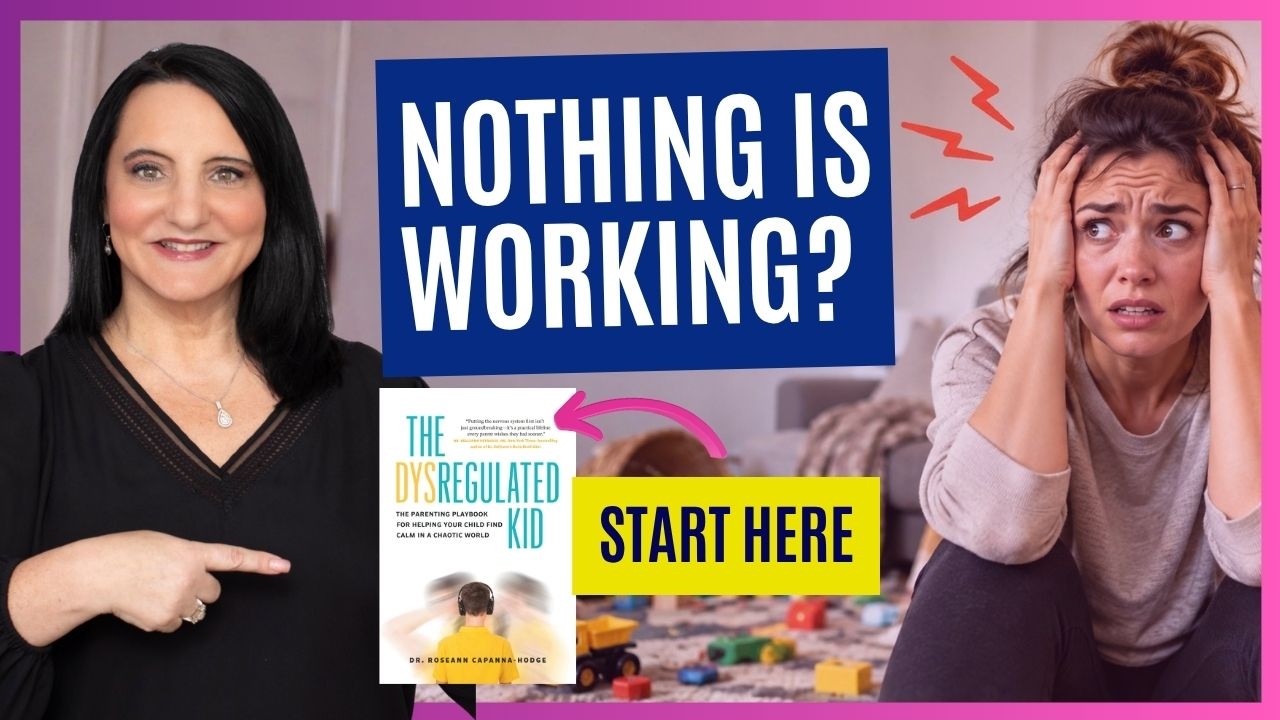
Dr. Roseann Capanna-Hodge is a licensed therapist, certified school psychologist, and leading expert in emotional dysregulation in children. With over 30 years of experience, she helps parents understand the root causes of meltdowns, anxiety, ADHD, and challenging behavior through the lens of nervous system regulation. Dr. Roseann teaches practical, science-backed strategies for co-regulation and how to calm a dysregulated child using her Regulation First Parenting® approach. She is the host of the Dysregulated Kids Podcast and author of The Dysregulated Kid.
Dr. Roseann Capanna-Hodge
Emotional Dysregulation in Children & Nervous System Expert
Regulation First Parenting® | CALMS Protocol™
Host of the Dysregulated Kids Podcast (Top 1% Globally)
Author of The Dysregulated Kid

Find this helpful? Leave us a review!
Your feedback helps more overwhelmed parents find calm, clarity, and the proven tools that make everyday life easier.
Dr. Roseann Capanna-Hodge: Helping Families of Dysregulated Kids Thrive Through Regulation First Parenting®
As the creator of Regulation First Parenting®, she’s helping families of dysregulated kids discover a compassionate, brain-based path forward. Through The Dysregulated Kids™ Podcast (top 2% globally), she offers practical strategies that help parents understand their child’s brain and support lasting change.
Through The Global Institute of Children’s Mental Health and Dr. Roseann, LLC, she’s created resources like the Neurotastic® Brain Formulas and the Regulation First Parenting® framework—meeting families where they are and supporting them through challenges like ADHD, anxiety, OCD, PANS/PANDAS, and behavioral struggles.
Recognized by Forbes as “a thought leader in children’s mental health,” Dr. Roseann is changing how we understand emotional dysregulation in children—one family at a time.