
Join the Dysregulation Insider get free calm parenting tips straight to your inbox!
YES, I'M IN!5 Simple Co-Regulation Techniques to Help Parents Calm Their Child’s Emotions | Co-Regulation Parenting | E261





Estimated Reading Time: 7 Minutes
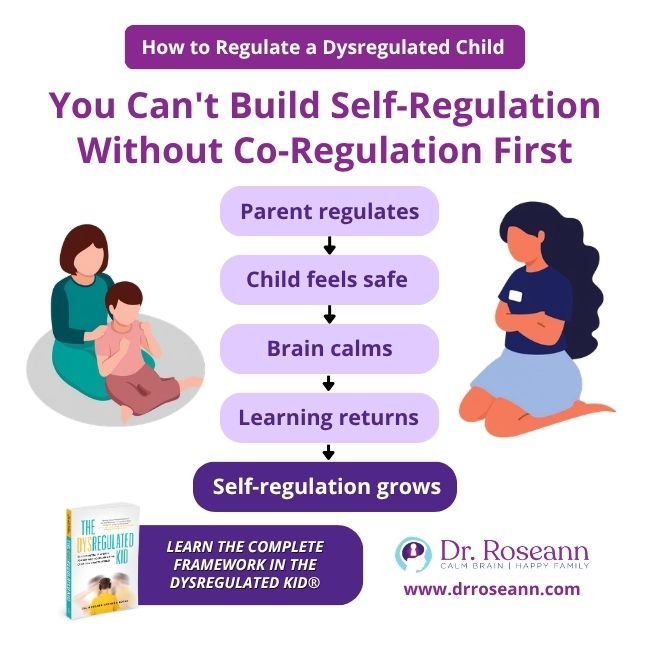
Co-regulation is one of the most powerful tools parents have because it helps children borrow calm from a regulated adult until they develop the ability to regulate themselves.
The good news?
Co-regulation doesn't require complicated techniques.
Small, consistent actions can create profound change.
In this episode, I share five simple co-regulation techniques that help calm your child's emotions, strengthen connection, and build lifelong emotional regulation skills.
Parent questions
What is co-regulation and why does it matter?
Co-regulation is the process of helping a child regulate their nervous system through your calm presence, support, and connection.
Children are not born knowing how to regulate emotions.
They learn regulation through repeated experiences with regulated adults.
What Happens During Dysregulation?
When children become overwhelmed:
- The nervous system shifts into survival mode
- Emotions intensify
- Logical thinking decreases
- Problem-solving becomes difficult
This is not bad behavior.
It's a dysregulated brain.
Why Co-Regulation Works
Co-regulation provides:
- Emotional safety
- Nervous system support
- Connection
- A model for self-regulation
Before children can regulate themselves, they need someone to help them get there.
Technique #1: Co-Breathing
One of the simplest and most effective co-regulation strategies is co-breathing.
What Is Co-Breathing?
Co-breathing involves breathing alongside your child.
Instead of telling them to calm down, you show them how.
Why It Works
Deep breathing activates the parasympathetic nervous system, helping shift the body out of fight, flight, or freeze.
Simple Breathing Exercises
Try:
4-7-8 Breathing
- Inhale for 4 seconds
- Hold for 7 seconds
- Exhale for 8 seconds
Bubble Breathing
For younger children, pretend you're slowly blowing bubbles.
Real-Life Example
A child becomes anxious before school.
Rather than discussing their worries immediately, a parent practices three slow breaths alongside them.
Within minutes, the child's nervous system begins settling.
Consistency matters more than perfection.
Technique #2: Mirror Calming
Children naturally mirror the nervous systems around them.
That's why mirror calming can be so effective.
What Is Mirror Calming?
Mirror calming involves intentionally using your body language, posture, and tone to model calm.
How to Do It
- Lower your voice
- Relax your shoulders
- Slow your movements
- Face your child gently rather than confrontationally
Why It Works
Children often feel safer when they sense calm rather than control.
Real-Life Example
A child begins escalating emotionally.
Instead of raising her voice, a parent softens her tone and lowers her body posture.
The child gradually begins matching that calmer energy.
Behavior is communication.
And body language communicates powerfully.
Technique #3: Physical Contact
For many children, physical connection is one of the fastest ways to calm the nervous system.
Why Physical Contact Helps
Safe physical touch:
- Releases calming hormones
- Provides reassurance
- Creates connection
- Supports nervous system regulation
Examples
- A hug
- Holding hands
- A gentle hand on the shoulder
- Sitting close together
Important Reminder
Always respect your child's preferences.
Not every child wants touch when they're overwhelmed.
Real-Life Example
When my son Max became dysregulated, I would often ask:
"Would you like a hug?"
Sometimes that simple act of connection was enough to help his nervous system begin settling.
Everyone needs connection.
And physical reassurance can be a powerful form of co-regulation.
Technique #4: Rhythm and Movement
The nervous system responds strongly to rhythm.
Why Rhythm Works
Rhythmic activities help:
- Reduce stress
- Increase regulation
- Create predictability
- Support emotional recovery
Examples of Rhythm-Based Regulation
- Walking
- Rocking
- Swaying
- Humming
- Singing
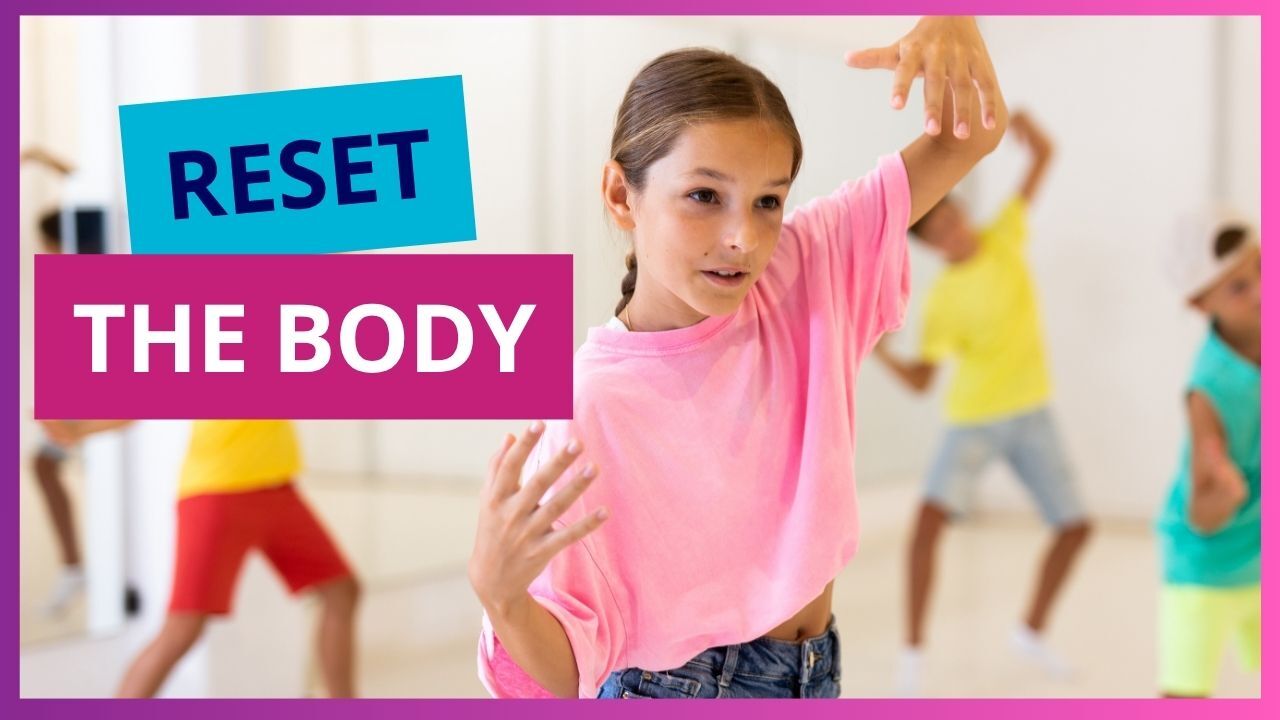
- Dancing
Why This Matters for Neurodivergent Kids
Many autistic children naturally use repetitive movements, often called stimming, as a way to regulate.
Rather than automatically trying to stop those behaviors, it's important to understand the regulation function they serve.
Real-Life Example
A child who is emotionally overwhelmed may calm significantly after a short walk while holding a parent's hand.
The rhythm itself becomes regulating.
Technique #5: Verbal Co-Regulation
Words matter.
But timing matters too.
What Is Verbal Co-Regulation?
Verbal co-regulation uses calm, supportive language to guide children back toward regulation.
Helpful Phrases
Try:
- "I'm here with you."
- "You're safe."
- "We'll figure this out together."
- "Let's take one breath."
Why It Works
Supportive language:
- Reduces shame
- Builds connection
- Increases emotional safety
- Encourages emotional expression
Real-Life Example
A child who normally shuts down begins talking about their feelings after hearing repeated validation and support during difficult moments.
Children often open up when they feel safe.
Why consistency matters more than perfection
Parents often worry they're not doing enough.
The truth is that co-regulation doesn't require perfection.
Aim for Progress
You don't need to respond perfectly every time.
What matters is consistency.
Every calm interaction helps strengthen your child's nervous system.
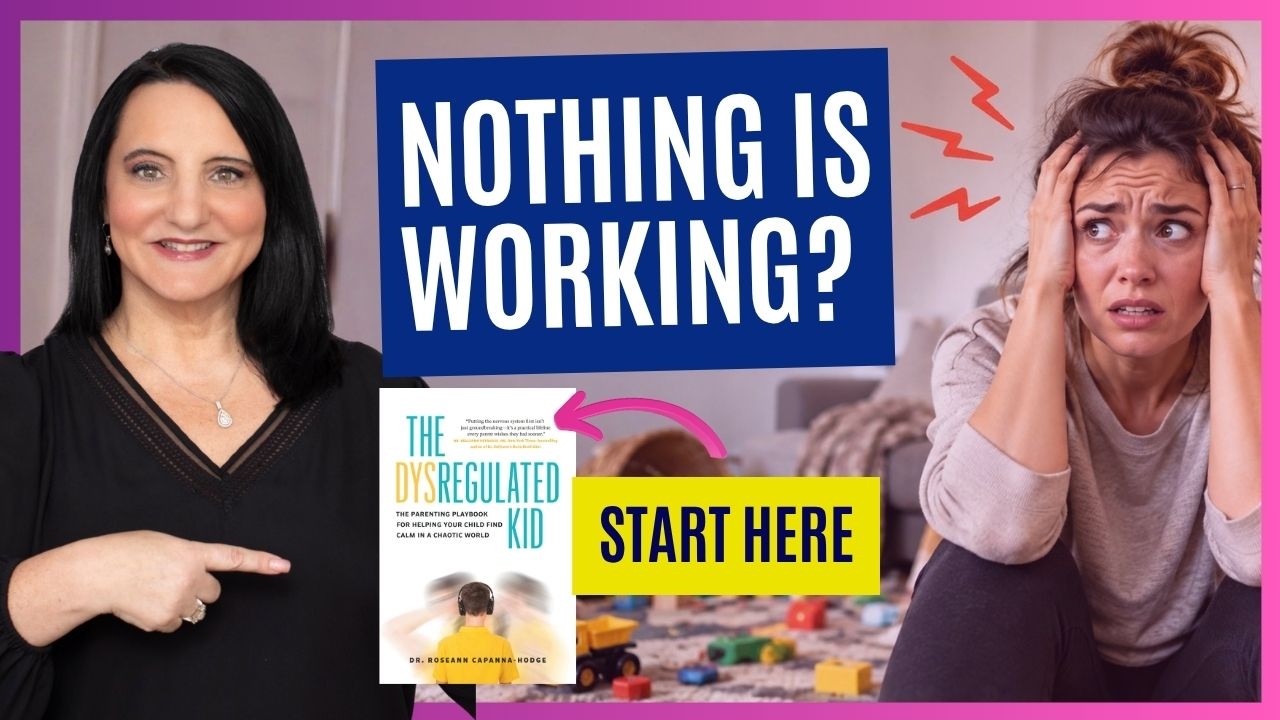
For a parent guide that expands on these everyday regulation moments, explore The Dysregulated Kid.
Emotional Regulation Is Learned
Children build regulation skills through:
- Repetition
- Connection
- Safety
- Practice
Small moments matter.
Over time, those moments become lasting change.
🗣️ “When you and your child practice co-breathing regularly, it becomes a natural and calming tool that both of you can rely on in moments of stress.” — Dr. Roseann
Need more support helping your child regulate emotions?
The Regulation Rescue Kit gives you practical Regulation First Parenting® tools that help reduce meltdowns, improve emotional regulation, and strengthen parent-child connection. Become a Dysregulation Insider VIP and get your FREE kit: www.drroseann.com/newsletter
Takeaway & What’s Next
Co-regulation is one of the most powerful gifts you can give your child.
Your child isn't giving you a hard time.
They're having a hard time.
And when you respond with calm, connection, and consistency, you help them build the emotional skills they'll use for the rest of their lives.
Remember:
- Breathe together.
- Model calm.
- Use connection.
- Add rhythm and movement.
- Support with words.
Small moments create lasting change.
It's gonna be OK.
Not sure where to start?
Use the Solution Matcher to get personalized recommendations based on your child's emotional and behavioral needs. Start here: www.drroseann.com/help
Your child’s nervous system learns regulation through connection with yours. The Dysregulated Kid® shows you how to make co-regulation part of everyday parenting so you can help your child move from overwhelmed and reactive to calm and connected. Get the book at dysregulatedkid.com.
FAQs
What is co-regulation?
Co-regulation is the process of helping a child regulate their emotions through connection, support, and nervous system regulation provided by a calm adult.
Why does co-regulation work?
Children learn emotional regulation through repeated experiences with regulated caregivers. Co-regulation helps calm the nervous system and build self-regulation skills over time.
What is the fastest co-regulation technique?
Co-breathing is often one of the quickest ways to calm the nervous system because it activates the parasympathetic nervous system and promotes emotional regulation.
Should I talk to my child during a meltdown?
Keep communication simple. During intense dysregulation, children often struggle to process language. Focus on safety, calm, and connection first.
How long does it take for co-regulation to work?
Co-regulation is a skill-building process. While some techniques help immediately, lasting emotional regulation develops through repeated experiences over time.
Dr. Roseann Capanna-Hodge is a licensed therapist, certified school psychologist, and leading expert in emotional dysregulation in children. With over 30 years of experience, she helps parents understand the root causes of meltdowns, anxiety, ADHD, autism, learning differences, and challenging behavior through the lens of nervous system regulation. She is the creator of Regulation First Parenting®, host of the Dysregulated Kids Podcast, and author of The Dysregulated Kid.
Dr. Roseann Capanna-Hodge
Emotional Dysregulation in Children & Nervous System Expert
Regulation First Parenting® | CALMS Protocol™
Host of the Dysregulated Kids Podcast (Top 1% Globally)
Author of The Dysregulated Kid

Find this helpful? Leave us a review!
Your feedback helps more overwhelmed parents find calm, clarity, and the proven tools that make everyday life easier.
Dr. Roseann Capanna-Hodge: Helping Families of Dysregulated Kids Thrive Through Regulation First Parenting®
As the creator of Regulation First Parenting®, she’s helping families of dysregulated kids discover a compassionate, brain-based path forward. Through The Dysregulated Kids™ Podcast (top 2% globally), she offers practical strategies that help parents understand their child’s brain and support lasting change.
Through The Global Institute of Children’s Mental Health and Dr. Roseann, LLC, she’s created resources like the Neurotastic® Brain Formulas and the Regulation First Parenting® framework—meeting families where they are and supporting them through challenges like ADHD, anxiety, OCD, PANS/PANDAS, and behavioral struggles.
Recognized by Forbes as “a thought leader in children’s mental health,” Dr. Roseann is changing how we understand emotional dysregulation in children—one family at a time.