
Join the Dysregulation Insider get free calm parenting tips straight to your inbox!
YES, I'M IN!What are the Best Non-Medication Strategies to Improve Attention and Mood? | Nervous System Regulation | E265





Estimated Reading Time: 7 Minutes
When children struggle with attention, mood, focus, or behavior, many families are quickly told that medication is the answer. While medication can be helpful for some children, it should never be the only conversation. Understanding the best non-medication strategies to improve attention and mood gives parents more options and helps address the root causes of dysregulation.
Many attention and mood challenges aren't simply behavioral issues.
They're nervous system issues.
When the nervous system is dysregulated, children may struggle to focus, manage emotions, tolerate frustration, or stay organized. That's why addressing regulation first often creates the strongest and most lasting results.
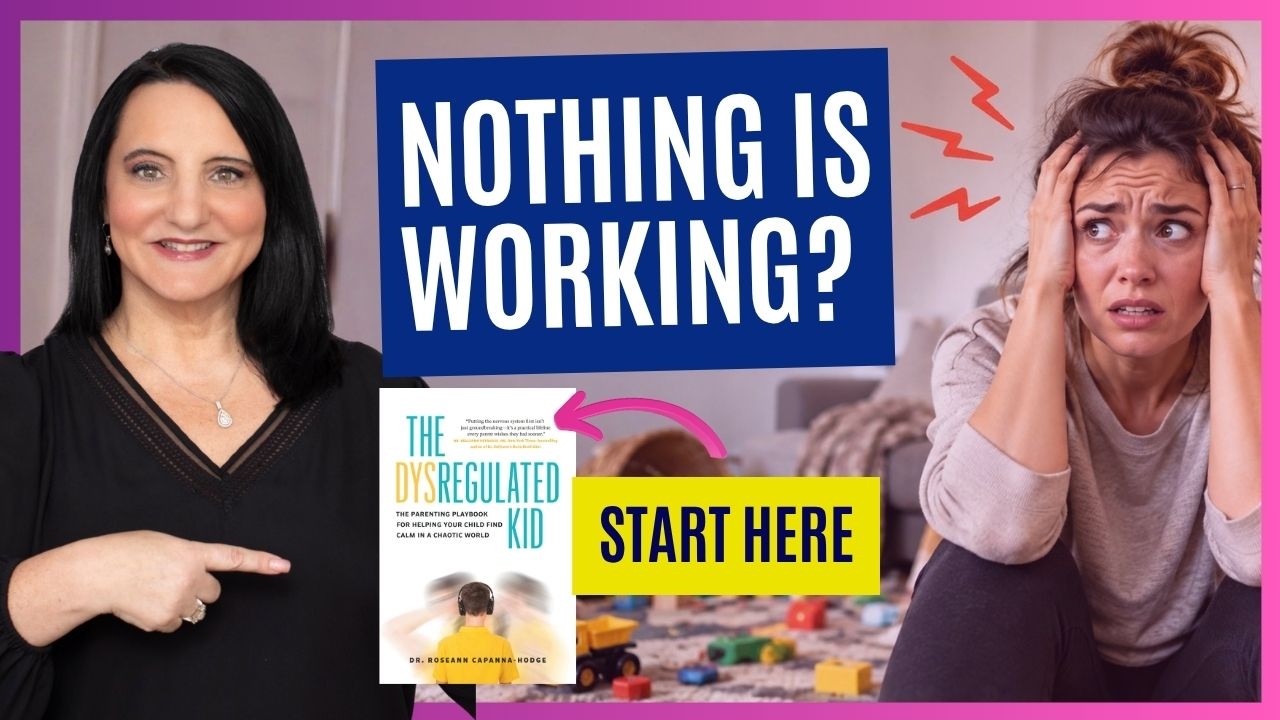
In this episode, I explain the science behind nervous system regulation and explore the non-medication strategies that can improve attention, mood, behavior, and overall well-being.
Why do children struggle with attention and mood?
Parents often assume that focus problems or mood swings automatically mean ADHD, anxiety, or another diagnosis.
Sometimes that's true.
But often there's more happening underneath.
The Real Issue: Nervous System Dysregulation
When the nervous system is dysregulated, children may appear:
- Distracted
- Hyperactive
- Emotional
- Irritable
- Unmotivated
- Anxious
Some children are under-stimulated.
Others are overstimulated.
Both can struggle with attention and emotional regulation.
What Under-Stimulation Looks Like
Children may:
- Daydream
- Lose focus
- Appear disconnected
- Struggle to complete tasks
What Overstimulation Looks Like
Children may:
- Have emotional outbursts
- Become easily frustrated
- Struggle with sensory input
- React intensely to stress
Behavior is communication.
And many attention and mood problems begin with a dysregulated nervous system.
Why is nervous system regulation so important?
The nervous system influences everything.
When it's regulated, children can:
- Focus more effectively
- Manage emotions
- Learn new skills
- Tolerate frustration
- Build resilience
When it's dysregulated, even simple tasks become difficult.
Regulation First Parenting®
One of the most important lessons I've learned is that:
You can't teach a dysregulated brain.
You have to calm the brain first.
That's why nervous system regulation sits at the foundation of every successful intervention.
Real-Life Example
A child struggles with attention and emotional outbursts.
Parents focus only on behavior.
Progress is limited.
Once nervous system regulation becomes part of the plan, attention improves and emotional regulation becomes easier.
🗣️ "Dysregulation lies at the heart of many attention, mood, and behavioral struggles." — Dr. Roseann
Need help calming your child's nervous system?
The Regulation Rescue Kit provides practical Regulation First Parenting® tools that help improve attention, emotional regulation, and behavior. Become a Dysregulation Insider VIP and get your FREE kit: www.drroseann.com/newsletter
How does nutrition affect attention and mood?
One of the most overlooked factors in children's mental health is nutrition.
What children eat directly affects:
- Brain function
- Mood
- Energy
- Attention
- Emotional regulation
The Mediterranean Diet
Research consistently supports the Mediterranean diet for:
- Anxiety
- Depression
- Attention
- Brain health
- Physical health
Foods That May Contribute to Dysregulation
Some children are particularly sensitive to:
- Excess sugar
- Highly processed foods
- Artificial additives
- Certain food sensitivities
Start Small
Many parents become overwhelmed trying to change everything at once.
Don't.
Choose one improvement and build from there.
Progress beats perfection.
Which supplements support attention and mood?
Supplementation can be helpful when used appropriately and under professional guidance.
Magnesium
Magnesium supports:
- Relaxation
- Emotional regulation
- Sleep
- Attention
Magnesium glycinate and magnesium L-threonate are often used because of their nervous system benefits.
Omega-3 Fatty Acids
Omega-3s support:
- Brain function
- Attention
- Mood regulation
- Inflammation reduction
Zinc
Zinc plays an important role in:
- Neurotransmitter function
- Attention
- Impulse control
Vitamin D
Vitamin D deficiencies are associated with:
- Mood issues
- Emotional dysregulation
- Cognitive challenges
Always consult a qualified healthcare provider before beginning supplementation.
How does mindfulness help attention and mood?
Mindfulness is one of the most effective—and most underused—tools for nervous system regulation.
Why It Works
Mindfulness helps children:
- Slow down
- Build self-awareness
- Manage stress
- Improve focus
- Strengthen emotional regulation
Simple Mindfulness Practices
- Deep breathing
- Prayer
- Meditation
- Grounding exercises
- Somatic exercises
Think of mindfulness like brushing your teeth.
Small daily practices create long-term benefits.
Real-Life Example
A child who struggles with anxiety begins practicing deep breathing before school.
Over time, stress decreases and focus improves.
Small habits create meaningful change.
What role does exercise play?
Movement is one of the most powerful non-medication interventions available.
Benefits of Exercise
Exercise improves:
- Attention
- Mood
- Executive functioning
- Emotional regulation
- Stress resilience
Great Options Include
- Sports
- Walking
- Yoga
- Dancing
- Outdoor play
Research consistently shows that physical activity improves attention and emotional well-being.
Important Reminder
Movement isn't optional for a healthy nervous system.
It's essential.
How does neurofeedback improve attention and mood?
Neurofeedback is one of my favorite brain-based tools because it directly targets nervous system regulation.
What Is Neurofeedback?
Neurofeedback trains the brain to create healthier brainwave patterns.
It helps improve:
- Attention
- Focus
- Emotional regulation
- Anxiety
- Mood
Why Brain Mapping Matters
Many neurofeedback programs begin with a QEEG brain map.
This allows providers to identify:
- Dysregulated brain regions
- Overactive areas
- Underactive areas
The result is a customized plan based on the child's actual brain activity.
Consistency Matters
Families who commit to the process tend to see the strongest results.
Neurofeedback isn't a quick fix.
It's a training process.
Why is early intervention so important?
One of the saddest things I see is families waiting until crisis hits before seeking help.
The earlier we support regulation, the easier it becomes to build lasting change.
What Happens When We Wait?
Children may experience:
- More anxiety
- Greater emotional dysregulation
- Increased academic struggles
- Relationship difficulties
What Happens When We Act Early?
Children develop:
- Stronger self-regulation
- Better attention
- Improved resilience
- Greater emotional awareness
The sooner we calm the brain, the easier learning becomes.
Takeaway & What’s Next
Medication isn't the only path to helping a child thrive.
Many children benefit tremendously from:
- Nervous system regulation
- Nutrition support
- Exercise
- Mindfulness
- Neurofeedback
- Parent coaching
Your child isn't giving you a hard time.
They're having a hard time.
When we focus on regulation first, attention, mood, and behavior often improve naturally.
Remember:
- Calm the brain first.
- Support the nervous system.
- Start small.
- Stay consistent.
It's gonna be OK.
FAQs
What are the best non-medication strategies for improving attention?
Some of the most effective strategies include nervous system regulation, exercise, nutrition improvements, mindfulness practices, and neurofeedback.
Can diet really affect attention and mood?
Yes. Nutrition plays a major role in brain function, emotional regulation, attention, and overall nervous system health.
Does neurofeedback help ADHD?
Research supports neurofeedback as a helpful intervention for improving attention, emotional regulation, and executive functioning in many children.
How does mindfulness improve focus?
Mindfulness helps regulate the nervous system, reduce stress, and strengthen attention networks in the brain.
When should parents seek professional support?
If attention, mood, or behavior challenges are affecting school, relationships, or daily life, professional guidance can help identify the most effective interventions.
Not sure where to start?
Use the Solution Matcher to get personalized recommendations based on your child's emotional and behavioral needs.
Start here: www.drroseann.com/help
Dr. Roseann Capanna-Hodge is a licensed therapist, certified school psychologist, and leading expert in emotional dysregulation in children. With over 30 years of experience, she helps parents understand the root causes of meltdowns, anxiety, ADHD, and challenging behavior through the lens of nervous system regulation. Dr. Roseann teaches practical, science-backed strategies for co-regulation and how to calm a dysregulated child using her Regulation First Parenting® approach. She is the host of the Dysregulated Kids Podcast and author of The Dysregulated Kid.
Dr. Roseann Capanna-Hodge
Emotional Dysregulation in Children & Nervous System Expert
Regulation First Parenting® | CALMS Protocol™
Host of the Dysregulated Kids Podcast (Top 1% Globally)
Author of The Dysregulated Kid

Find this helpful? Leave us a review!
Your feedback helps more overwhelmed parents find calm, clarity, and the proven tools that make everyday life easier.
Dr. Roseann Capanna-Hodge: Helping Families of Dysregulated Kids Thrive Through Regulation First Parenting®
As the creator of Regulation First Parenting®, she’s helping families of dysregulated kids discover a compassionate, brain-based path forward. Through The Dysregulated Kids™ Podcast (top 2% globally), she offers practical strategies that help parents understand their child’s brain and support lasting change.
Through The Global Institute of Children’s Mental Health and Dr. Roseann, LLC, she’s created resources like the Neurotastic® Brain Formulas and the Regulation First Parenting® framework—meeting families where they are and supporting them through challenges like ADHD, anxiety, OCD, PANS/PANDAS, and behavioral struggles.
Recognized by Forbes as “a thought leader in children’s mental health,” Dr. Roseann is changing how we understand emotional dysregulation in children—one family at a time.