
Join the Dysregulation Insider get free calm parenting tips straight to your inbox!
YES, I'M IN!How Fast Does Neurofeedback Work? | Nervous System Strategies | E268





Parents often ask when they can safely start neurofeedback. Based on decades of clinical experience, children as young as three and a half can benefit, because early childhood is the peak window for neuroplasticity.
Younger brains rewire quickly, especially around:
- Emotional regulation
- Impulse control
- Attention and focus
- Behavioral flexibility
Real-life example: A mom shared that her four-year-old, who used to spiral into daily tantrums, began staying calmer during transitions after just a few sessions.
Takeaway: The earlier we support a dysregulated brain, the easier it is to build healthy patterns that last.
Does Neurofeedback help school-age kids who struggle in class?
Absolutely. At this age, academic and social demands increase, and many kids hit a wall because their nervous system is overwhelmed. Neurofeedback strengthens the brain pathways responsible for:
- Working memory and processing speed
- Executive functioning
- Stress tolerance
- Self-regulation in the classroom
For kids who come home exhausted and dysregulated, neurofeedback teaches the brain how to stay balanced even when the demands are high.
Can neurofeedback help my emotional or impulsive teenager?
Yes, and teens often feel relief quickly. During adolescence, the brain undergoes major restructuring, which is why emotions and impulses spike. Neurofeedback helps teens:
- Dial down emotional intensity
- Think before acting
- Improve learning and attention
- Reduce risky or impulsive behavior
Scenario: A parent shared that her teen, who constantly reacted before thinking, began pausing, breathing, and responding more thoughtfully after consistent sessions.
How does neurofeedback support adults who feel overwhelmed or stuck?
Adults often carry old patterns, trauma, and chronic stress. Neurofeedback helps the brain regulate so the body can heal. It is especially beneficial for adults with:
- Chronic stress or overwhelm
- Autoimmune issues and chronic illness
- Emotional reactivity
- Burnout or cognitive fog
Bottom line: Regulation is possible at any age, but protocols must be personalized.
Neurofeedback for Early Childhood Regulation
Neurofeedback is effective for children as young as three, helping shape nervous system regulation in children before maladaptive patterns become entrenched. Early intervention taps into peak neuroplasticity and can prevent long-term dysregulation.
Parent Example: A mom shared that her four-year-old, previously prone to daily tantrums, began staying calmer during transitions after a few neurofeedback sessions. The child could focus during morning routines, and the parents noticed less emotional reactivity overall.
Key benefits:
- Strengthens impulse control in toddlers and preschoolers
- Builds attention and focus before school demands increase
- Supports long-term emotional regulation
Neurofeedback for Teens and Parental Stress
Older kids and teenagers often experience academic pressure, social stress, and executive functioning challenges. Neurofeedback supports dysregulated children and reduces parental stress and dysregulation, giving families tools to navigate emotionally charged moments.
Parent Example: A parent noticed that their 13-year-old, who would react explosively to small corrections, began pausing, breathing, and responding thoughtfully after consistent neurofeedback sessions. Homework battles decreased, and after-school transitions became smoother, reducing stress for both teen and parent.
Key benefits:
- Calms emotional intensity and reactive behaviors
- Improves working memory, focus, and academic follow-through
- Supports parent-child co-regulation by modeling calm energy
If you’re tired of walking on eggshells or feeling like nothing works…
Get the FREE Regulation Rescue Kit and finally learn what to say and do in the heat of the moment.
Become a Dysregulation Insider VIP at www.drroseann.com/newsletter and take the first step to a calmer home.
“When we calm the brain first, kids can finally focus, listen, learn, and regulate. That’s when everything starts to change.”
— Dr. Roseann
Neurofeedback is not a quick fix, but it is a powerful, science-backed tool that improves emotional regulation, focus, and behavior at every stage of life. Whether your child is three, thirteen, or you’re the adult needing support, it’s gonna be OK. Your brain can change, and so can your family’s daily life.
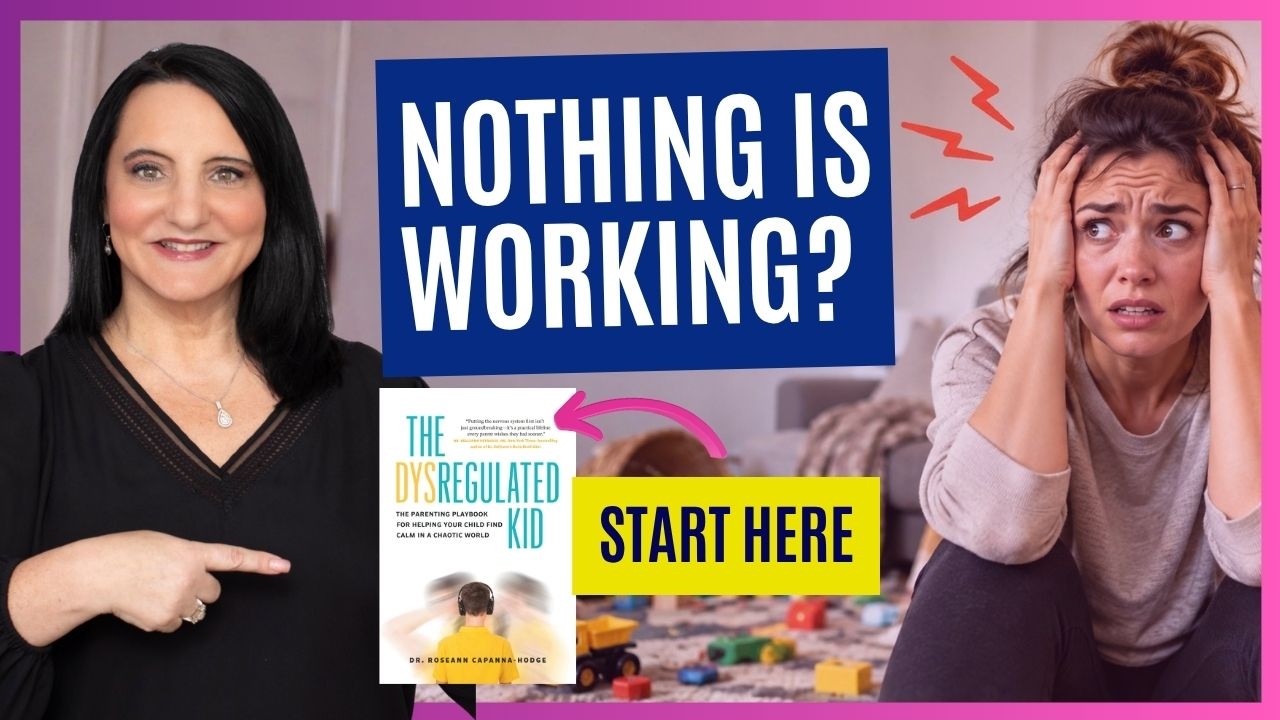
You don’t need to be a perfect parent; you just need a roadmap that actually works for a dysregulated nervous system. Grab your copy of The Dysregulated Kid and bring peace back to your home tonight.
.png)
FAQ
How many sessions do kids usually need?
Most children benefit from 20 to 30 sessions, depending on their level of dysregulation and the clinician’s protocol.
Is neurofeedback safe for young kids?
Yes. It is noninvasive, calming, and well tolerated even by sensitive or anxious children.
Can neurofeedback replace medication?
For some children, it reduces the need for medication, but decisions should be made with a provider.
Does neurofeedback help with anxiety?
Yes. It calms the nervous system, reduces reactivity, and supports emotional stability.
How long before parents see changes?
Some notice improvements within a few sessions, while others experience gradual, steady progress.
Next Step: Every child’s journey is different. That’s why cookie-cutter solutions don’t work.
Take the free Solution Matcher Quiz and get a customized path to support your child’s emotional and behavioral needs.
Start today at www.drroseann.com/help
When families are struggling, it’s understandable to want to know how quickly an intervention like neurofeedback might help. But nervous system change isn’t about chasing an overnight fix—it’s about understanding patterns, building capacity, and supporting the whole child consistently. In The Dysregulated Kid®, I give parents the everyday Regulation First Parenting® tools that complement that brain-first perspective, helping you reduce escalation and build more calm, connection, and resilience at home. Get The Dysregulated Kid® at dysregulatedkid.com.
Dr. Roseann Capanna-Hodge is a licensed therapist, certified school psychologist, and leading expert in emotional dysregulation in children. With over 30 years of experience, she helps parents understand the root causes of meltdowns, anxiety, ADHD, and challenging behavior through the lens of nervous system regulation. Dr. Roseann teaches practical, science-backed strategies for co-regulation and how to calm a dysregulated child using her Regulation First Parenting® approach. She is the host of the Dysregulated Kids Podcast and author of The Dysregulated Kid.
Dr. Roseann Capanna-Hodge
Emotional Dysregulation in Children & Nervous System Expert
Regulation First Parenting® | CALMS Protocol™
Host of the Dysregulated Kids Podcast (Top 1% Globally)
Author of The Dysregulated Kid

Find this helpful? Leave us a review!
Your feedback helps more overwhelmed parents find calm, clarity, and the proven tools that make everyday life easier.
Dr. Roseann Capanna-Hodge: Helping Families of Dysregulated Kids Thrive Through Regulation First Parenting®
As the creator of Regulation First Parenting®, she’s helping families of dysregulated kids discover a compassionate, brain-based path forward. Through The Dysregulated Kids™ Podcast (top 2% globally), she offers practical strategies that help parents understand their child’s brain and support lasting change.
Through The Global Institute of Children’s Mental Health and Dr. Roseann, LLC, she’s created resources like the Neurotastic® Brain Formulas and the Regulation First Parenting® framework—meeting families where they are and supporting them through challenges like ADHD, anxiety, OCD, PANS/PANDAS, and behavioral struggles.
Recognized by Forbes as “a thought leader in children’s mental health,” Dr. Roseann is changing how we understand emotional dysregulation in children—one family at a time.