


Estimated reading time: 10 minutes
Ever wonder why your child with autism struggles to connect, focus, or stay calm—no matter what you try? You’re not alone, and it’s most definitely not your fault.
The good news? QEEG brain mapping helps us see what’s really going on in the brain, so you can finally move past the guesswork and get the targeted support your child needs.
Brain Dysregulation in Autism: Why Behavior Isn’t the Real Problem
If your child melts down over small changes, avoids eye contact, or clings tightly to routines, you may find yourself wondering: “Why does everything feel so hard for them—even the little things?”
It’s not because they’re trying to be difficult. It’s because their brain is struggling to keep up.
Children with autism often show atypical brain connectivity, which can include:
- Hypoconnectivity
- Hyperconnectivity
This imbalance in how the brain’s networks talk to each other can explain why so many kids on the spectrum experience challenges with:
- Expressing themselves through words or body language
- Picking up on social cues and building relationships
- Regulating their emotions and calming themselves down
- Adapting to change or going with the flow
- Repeating behaviors or getting “stuck” in certain routines
These aren’t signs of defiance or disobedience. They’re signs of a dysregulated nervous system doing its best to cope.
As the CDC (2023) notes, disruptions in brain function are at the root of the communication, emotional, and behavioral challenges we see in autism.
Here’s the hopeful part: With QEEG brain mapping, we can finally stop guessing and start understanding what’s going on inside your child’s brain.
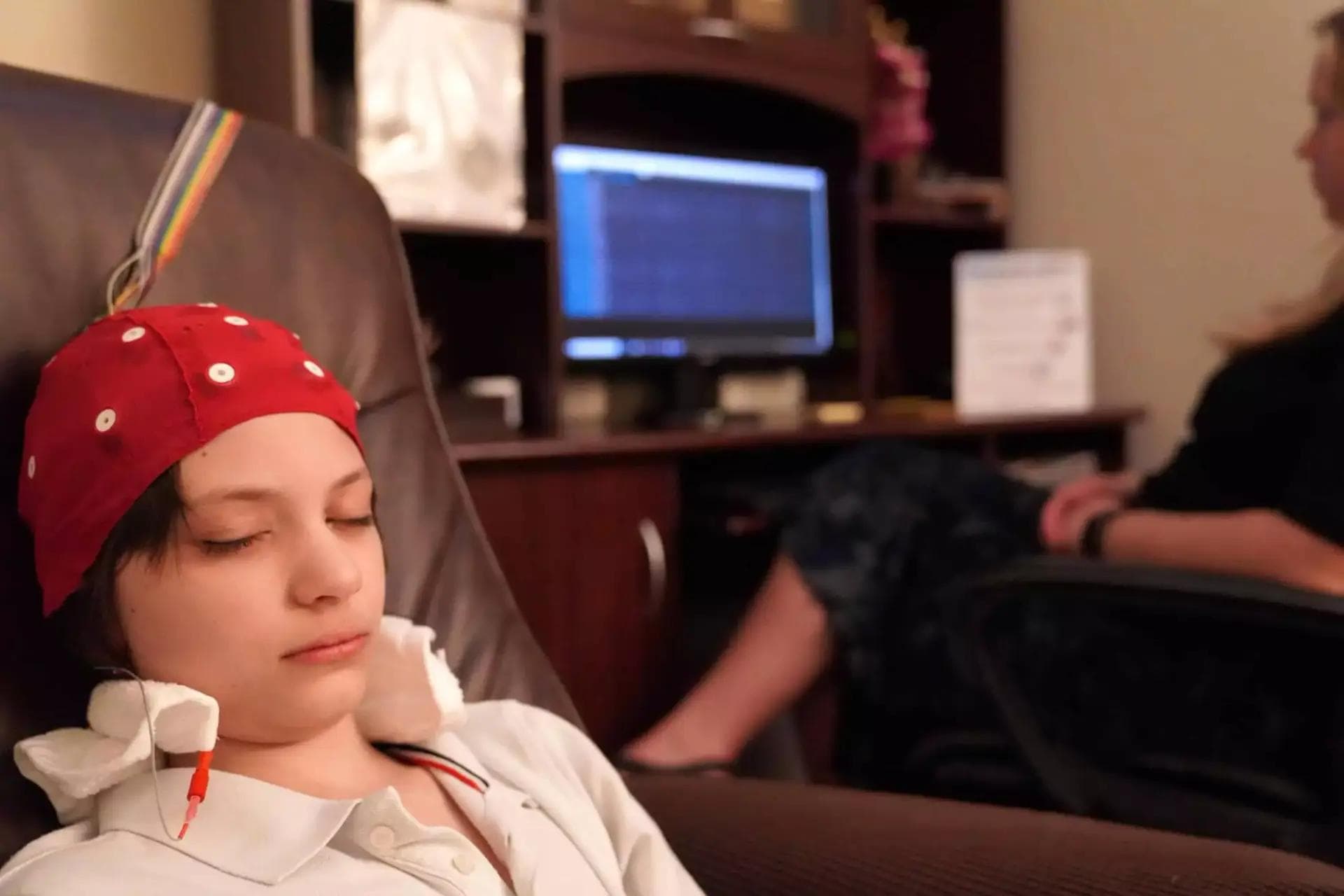
What is QEEG Brain Mapping for Autism?
Ever wish you could peek inside your child’s brain—just for a moment—to understand what’s driving those big emotions and out-of-nowhere meltdowns?
That’s exactly what QEEG brain mapping lets us do.
QEEG helps us:
- Pinpoint which areas of the brain are overactive or underactive
- Understand what’s fueling your child’s emotional and behavioral responses
- Create a targeted, science-backed plan to help calm the brain and improve function
What Can QEEG Reveal in Autistic Kids?
QEEG measures five main brainwave frequencies—each linked to specific aspects of your child’s thinking, feeling, and functioning:
| Brainwave | Primary Role | What It Supports |
|---|---|---|
| Delta Waves | Deep sleep and physical healing | Restore and reset the brain overnight |
| Theta Waves | Imagination and emotional processing | Support creativity, daydreaming, and deep relaxation |
| Alpha Waves | Calm and quiet focus | Help regulate mood and bring emotional ease |
| Beta Waves | Active thinking and attention | Needed for focus, learning, and executive functioning |
| Gamma Waves | Higher-level thinking and memory | Help your child make sense of the world and recall information |
Kids with Autism often have unique patterns of brain activity. QEEG helps us uncover:
- Sensory overload patterns
- Emotional reactivity in limbic areas
- Underconnected social and language regions
- Brain networks that aren’t communicating well
Instead of guessing what your child needs, we get clear data to guide the right supports.
When we know which brainwaves are off balance, we can stop guessing—and start using real, personalized tools to support your child’s brain.
Decode the behavior, regulate the brain.
For parents navigating ADHD challenges, The Dysregulated Kid provides specific guidance on supporting neurodivergent brains through practical regulation strategies.
Always remember… “Calm Brain, Happy Family™”
Disclaimer: This article is not intended to give health advice and it is recommended to consult with a physician before beginning any new wellness regime. The effectiveness of diagnosis and treatment vary by patient and condition. Dr. Roseann Capanna-Hodge, LLC does not guarantee certain results.
Are you looking for SOLUTIONS for your struggling child or teen?
Dr. Roseann and her team are all about science-backed solutions, so you are in the right place!
Meet the Expert
Licensed Therapist | Certified School Psychologist
Board Certified in Neurofeedback (BCN) | 30+ Years Clinical Experience
Expert in Emotional Dysregulation in Children and Nervous System Regulation
Host, Dysregulated Kids Podcast | Author, The Dysregulated Kid
Dr. Roseann Capanna-Hodge is a licensed therapist, certified school psychologist, and leading expert in emotional dysregulation in children and nervous system regulation. With over 30 years of clinical experience and having analyzed more than 10,000 brain maps, she helps families understand what behavior is really signaling—and how to calm the nervous system first so real change can happen.
She is the creator of Regulation First Parenting® and the CALMS Protocol™, host of the top 1% podcast Dysregulated Kids, and author of The Dysregulated Kid.