
Join the Dysregulation Insider get free calm parenting tips straight to your inbox!
YES, I'M IN!Helping Worried and Anxious Children Thrive in School: Proven Strategies for Parents | Co-Regulation Parenting | E232





As parents, it’s natural to be concerned about our children’s academic progress and their future. However, to help worried and anxious children thrive in school, it's essential to balance these concerns with supportive strategies that address their emotional well-being. Understanding the root cause of their worries is also crucial as it enables us to tailor our approach and provide the most effective support for their unique needs. By focusing on creating a nurturing environment, implementing relaxation techniques, and addressing school refusal proactively, we can better support our children in overcoming their anxiety and achieving success. Join me in another episode where we delve deeper into practical strategies for fostering resilience and confidence in our children, and explore additional ways to support their emotional and academic growth.
Teaching Stress Tolerance and Problem-Solving Skills.
If there's one technique that truly reduces your child's anxiety, it's modeling calm behavior. I know it's not easy, but if we can aim to be calm most of the time, it makes a big difference. When we stay calm, two powerful things happen: our kids absorb that calm energy, and their nervous systems begin to regulate by mirroring ours. When you're around someone who is extremely anxious, you can sense it. I once knew someone whose anxiety was so palpable that I could feel it even through virtual meetings. If we maintain calmness, our kids are more likely to respond in the same way because they learn by observing us, not just by hearing what we say. Over time, they’ll begin to adopt our strategies, which can be incredibly rewarding. Any parent of teenagers knows how quickly they mimic our behaviors – whether it's our habits, our tone, or even our expressions – so modeling calmness becomes crucial in shaping their responses to stress. Another key component is establishing consistent routines. Anxious children often fear the unknown, and routines can help mitigate that stress. However, it’s important to find a balance—we don't want to overdo it and unintentionally reinforce their worries. Predictability can help lower their heightened anxiety, enabling them to focus and utilize their resources effectively. We also need to prioritize teaching stress tolerance. It’s concerning how little stress tolerance children have today. We've developed a mindset that stress should be entirely avoided, which has led to unhealthy coping mechanisms like relying on medication or substances. I've had to address this with my own kids, sometimes lightheartedly, by joking that I'll conduct hair analysis to keep them accountable. But in reality, it’s about educating them. Whether it's about managing stress, understanding their brains, or making healthier choices, it's vital that we guide them. Finally, teaching problem-solving skills is crucial, especially for our neurodivergent children. They may misinterpret situations, struggle with impulse control, or have difficulty focusing. Regulated children are better equipped to see solutions, not just problems. But these skills don’t develop on their own – we have to teach them, just like any other skill. Just like how I didn’t just learn neurofeedback overnight; it took me a lot of time and effort.
Encouraging Positive Self-Talk and Mindful Parenting.
Encouraging positive self-talk and mindful parenting is essential for fostering a healthy mindset in children. Our brains are naturally inclined to focus on the negative, so it's crucial to actively promote positive self-talk. Personally, I make a habit of verbalizing my own problem-solving and positive self-talk out loud. For instance, if I make a mistake, I’ll acknowledge it with a positive spin and tell myself something like, "Well, that was silly, but I can learn from it." It’s also important to address negative self-talk when we hear it in our children. If they express self-criticism, we should gently challenge those thoughts and guide them to reframe their perspective. Perfectionism, which is often seen in both adults and children, can exacerbate anxiety, so promoting an "80% awesome" mindset over perfectionism can help alleviate this stress. Furthermore, observe how these patterns of self-talk might reflect within your family. If you notice a trend of harsh self-judgment among your children or even yourself, consider it an opportunity for self-reflection and growth. This process can help break the cycle of anxiety and contribute to building a healthier, more supportive family dynamic.
Limiting Exposure to Stressful Media.
Limiting exposure to stressful media is essential because children of all ages are profoundly affected by what they see. For example, even as an adult, I found it deeply disturbing to witness violent behavior on TV. Such exposure can desensitize children to violence, trigger anxiety, and create fear around relationships. It's crucial to recognize how media content can impact their emotional well-being and nervous system. Instead of simply turning off media or issuing a lecture, use these moments as opportunities for open conversation. When your child encounters distressing content, discuss it with them. Ask how they feel about it, if they’ve heard others talking about it, and what their thoughts are. This approach helps them process their emotions and understand the content critically, rather than just avoiding it. Encourage your child to share their strategies for managing media stress, such as taking digital detoxes, and explore these practices together. This dialogue not only supports their emotional health but also respects their growing need for autonomy, particularly among teenagers. By engaging in these conversations, you help them navigate media influences in a thoughtful and supportive manner.
Teaching Relaxation Techniques and School Refusal Strategies.
Teaching relaxation techniques and addressing school refusal require a thoughtful and supportive approach. When introducing relaxation techniques, such as breath work, avoid simply instructing your child to practice them. Instead, actively engage in these exercises with them and provide encouragement and reinforcement. It's important to model and practice these techniques consistently, as they contribute to long-term emotional resilience and generational mental health. If your child is struggling with anxiety and school refusal, it’s crucial to incorporate relaxation strategies at home to improve their experience at school. Recognize that in recent years, particularly since the pandemic, instances of school refusal have increased significantly. If your child is having difficulty attending school, don't hesitate to collaborate with their teacher or school support staff. Consider requesting a meeting or seeking adjustments through an IEP or 504 plan if necessary. Remember that seeking help and exploring these strategies can make a substantial difference in overcoming school refusal and supporting your child's emotional well-being.
Not sure where to start? We'll help you find the right solution tailored to your needs. Visit https://drroseann.com/help/ today and take our FREE Brain and Behavior Solutions Matcher.
Discover science-backed mental health solutions and gain valuable insights from Dr. Roseann Capanna-Hodge by exploring the resources available at www.drroseann.com.
Join our Facebook group and connect with other parents and access valuable insights and strategies: https://drroseann.com/group
Links and Resources:
➡️ Join our FREE Natural Parenting Community to receive science-backed resources for your child and family. Join here.
➡️ Get help from Dr. Roseann and her team. Apply here.
➡️ “Is it ADHD or something else?” Take the quiz.
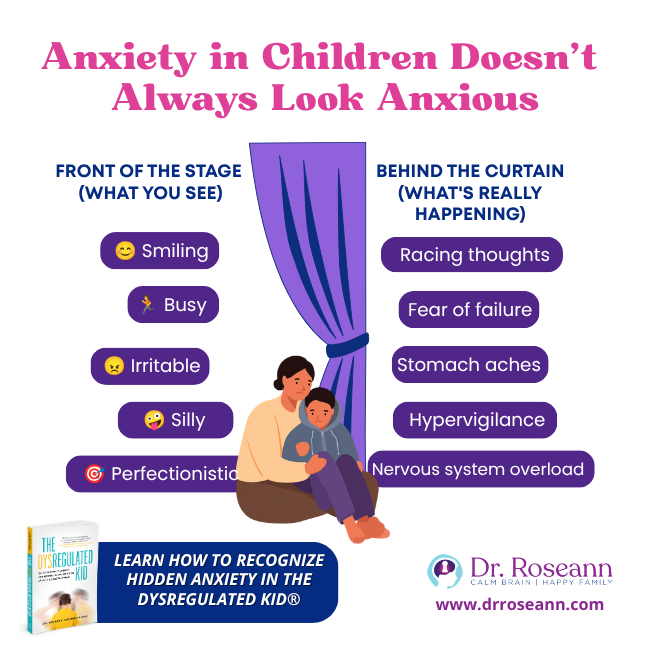
An anxious child can be bright, capable, and still use enormous amounts of nervous system energy just getting through the school day. In The Dysregulated Kid®, I show parents how anxiety and dysregulation can affect focus, learning, flexibility, transitions, and behavior—and why telling a worried child to “just relax” isn’t enough. With Regulation First Parenting®, you’ll learn how to calm the brain first, build coping capacity, and support your child without letting anxiety run the show. The goal isn’t simply getting through school; it’s helping your child feel safe enough to learn, connect, and thrive. Get The Dysregulated Kid® at dysregulatedkid.com.
Dr. Roseann Capanna-Hodge is a licensed therapist, certified school psychologist, and leading expert in emotional dysregulation in children. With over 30 years of experience, she helps parents understand the root causes of meltdowns, anxiety, ADHD, and challenging behavior through the lens of nervous system regulation. Dr. Roseann teaches practical, science-backed strategies for co-regulation and how to calm a dysregulated child using her Regulation First Parenting® approach. She is the host of the Dysregulated Kids Podcast and author of The Dysregulated Kid.
Dr. Roseann Capanna-Hodge
Emotional Dysregulation in Children & Nervous System Expert
Regulation First Parenting® | CALMS Protocol™
Host of the Dysregulated Kids Podcast (Top 1% Globally)
Author of The Dysregulated Kid

Find this helpful? Leave us a review!
Your feedback helps more overwhelmed parents find calm, clarity, and the proven tools that make everyday life easier.
Dr. Roseann Capanna-Hodge: Helping Families of Dysregulated Kids Thrive Through Regulation First Parenting®
As the creator of Regulation First Parenting®, she’s helping families of dysregulated kids discover a compassionate, brain-based path forward. Through The Dysregulated Kids™ Podcast (top 2% globally), she offers practical strategies that help parents understand their child’s brain and support lasting change.
Through The Global Institute of Children’s Mental Health and Dr. Roseann, LLC, she’s created resources like the Neurotastic® Brain Formulas and the Regulation First Parenting® framework—meeting families where they are and supporting them through challenges like ADHD, anxiety, OCD, PANS/PANDAS, and behavioral struggles.
Recognized by Forbes as “a thought leader in children’s mental health,” Dr. Roseann is changing how we understand emotional dysregulation in children—one family at a time.