

Join the Dysregulation Insider get free calm parenting tips straight to your inbox!
YES, I'M IN!Phone and the Brain: What Phones Are Really Doing to Your Child | Nervous System Regulation | E333





Estimated Reading Time: 6 Minutes
Many parents tell me the same thing: "My child is fine until the screen turns off."
Then suddenly there are tears, anger, defiance, emotional shutdowns, or full-blown meltdowns.
It's not bad parenting.
It's often a dysregulated nervous system responding to overstimulation.
In this episode, I explain how screens affect the developing brain, why digital devices can fuel emotional dysregulation, and what parents can do to create healthier technology habits without constant power struggles.
Why does screen time affect my child's emotions so much?
Screens do far more than entertain.
They activate powerful reward pathways in the brain.
Fast-paced videos, social media, gaming, and endless scrolling stimulate dopamine—the brain's reward chemical.
Over time, children can begin craving more and more stimulation while finding everyday activities less rewarding.
What Happens in the Brain?
Excessive screen use can contribute to:
- Overstimulation of the nervous system
- Reduced frustration tolerance
- Difficulty transitioning
- Poor emotional regulation
- Increased impulsivity
- Mood swings
- Sleep disruptions
At the same time, the prefrontal cortex—the part of the brain responsible for self-regulation, decision-making, and impulse control—doesn't get the same opportunities to strengthen.
The Sleep Connection
Screens also expose children to blue light, which can interfere with melatonin production.
When sleep suffers:
- Emotional regulation becomes harder
- Anxiety increases
- Attention decreases
- Behavior challenges become more frequent
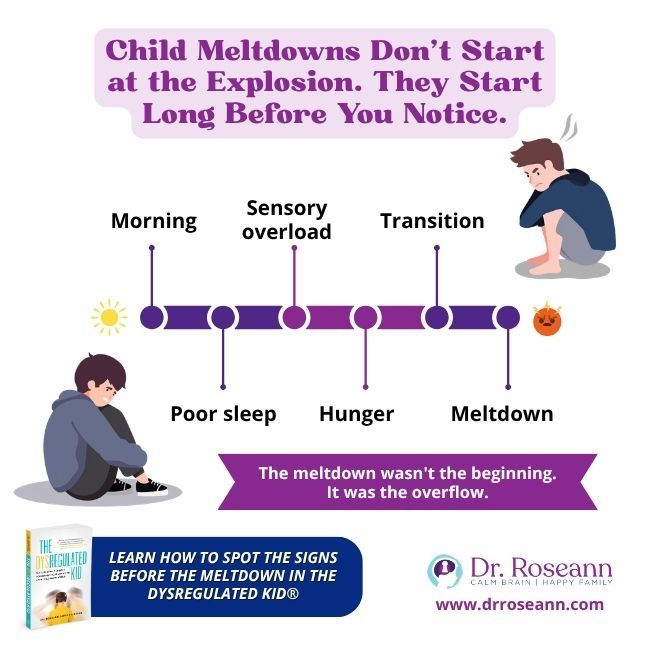
The result is often a nervous system that struggles to recover.
Behavior is communication.
When children fall apart after screens, their nervous system may be telling us it's overwhelmed.
What are the signs of screen time dysregulation?
Many parents describe their child as "not themselves" after screen use.
This is often one of the first clues that the nervous system is struggling.
Common Signs of Screen-Related Dysregulation
- Meltdowns when screens are turned off
- Aggression after gaming
- Mood swings
- Emotional shutdown
- Difficulty focusing on non-screen activities
- Refusal to transition
- Anxiety when devices aren't available
- Compulsive screen-seeking behavior
Real-Life Example
One parent shared that her 10-year-old son became completely unreachable after gaming.
He wouldn't eat.
He wouldn't talk.
He wouldn't engage with the family.
His nervous system was struggling to shift back into real-world engagement.
This isn't uncommon.
The more stimulating the content, the harder the transition can become.
How can I set screen limits without daily power struggles?
One of the biggest mistakes parents make is waiting until screen time is over to establish boundaries.
The most successful families create expectations before the device turns on.
Strategies That Help
Set Expectations Ahead of Time
Discuss:
- When screens can be used
- How long they're available
- What happens afterward
Predictability reduces resistance.
Use Visual Timers
Children often transition better when they can see time running out.
Give Advance Warnings
Try:
- 10-minute warning
- 5-minute warning
- 2-minute warning
This helps the brain prepare for the transition.
Stay Calm and Consistent
The goal isn't control.
The goal is helping the brain learn flexibility.
Helpful Language
Instead of: "You're done because I said so."
Try: "Your brain needs a break so it can feel strong, calm, and healthy."
Connection and education often work better than power struggles.
What should my child do instead of screen time?
One of the most important parenting truths is this:
You can't simply remove screens.
You have to replace them.
Children need activities that support healthy brain development.
Healthy Alternatives
- Outdoor play
- Sports
- Art
- Music
- Building projects
- Reading
- Face-to-face friendships
- Family activities
These experiences help strengthen:
- Emotional regulation
- Social skills
- Creativity
- Executive functioning
- Stress resilience
Create Screen-Free Zones
Many families benefit from:
- Device-free bedrooms
- Screen-free meals
- Technology-free family time
- Reduced screen use during school days
Small changes create powerful results over time.
How can I help my child recover from too much screen time?
If your child is already dysregulated, punishment usually isn't the answer.
Recovery is.
Focus on helping the nervous system settle.
Nervous System Reset Ideas
- Take a short walk
- Splash cold water on the face
- Eat a healthy snack
- Get outside
- Stretch
- Hug
- Breathe together
Talk About Screen Use Without Shame
Avoid making your child feel bad.
Instead ask:
- "How did your body feel afterward?"
- "Did you notice it was harder to calm down?"
- "What helped you feel better?"
This builds awareness rather than defensiveness.
Real-Life Example
A child begins tracking how they feel after different screen activities.
Over time, they notice gaming creates more irritability than watching a nature documentary.
That awareness becomes a powerful self-regulation tool.
🗣️ "Screens are here to stay—but dysregulation doesn't have to be." — Dr. Roseann
If you're tired of walking on eggshells or feeling like nothing works, get the FREE Regulation Rescue Kit and learn exactly what to say and do during meltdowns and emotional struggles. Become a Dysregulation Insider VIP: www.drroseann.com/newsletter
Why does screen time affect emotional regulation?
The nervous system thrives on balance.
Screens aren't inherently bad.
But excessive stimulation without recovery time can create real challenges.
When children regularly experience:
- Movement
- Play
- Face-to-face interaction
- Rest
- Outdoor time
their nervous systems become more resilient.
That's why the goal isn't eliminating technology.
The goal is helping children use it in ways that support—not undermine—their emotional health.
Takeaway & What’s Next
Phones, tablets, and screens aren't going away.
But understanding what they're doing to your child's brain helps you make informed choices that support emotional health and nervous system regulation.
Your child isn't giving you a hard time.
They're having a hard time.
And sometimes that struggle is connected to a brain that hasn't had enough time to recover from constant stimulation.
Remember:
- Calm the brain first.
- Create healthy limits.
- Prioritize recovery time.
- Focus on connection over control.
Small, consistent changes can transform how your child feels, behaves, and connects with the world around them.
It's gonna be OK.
Phones can add another layer of stimulation to a nervous system that is already overloaded. The Dysregulated Kid® helps you understand your child’s total regulation picture and gives you practical strategies for reducing overwhelm, setting limits, and supporting a calmer brain. Get the book at dysregulatedkid.com.
FAQs
Can screens affect my child's mental health?
Yes. Excessive screen time has been associated with increased anxiety, sleep problems, mood difficulties, and emotional dysregulation in some children.
Should my child have their own phone?
This depends on their age, maturity, emotional regulation skills, and ability to follow technology boundaries. Every family must make this decision based on their child's individual needs.
Can screen time cause social isolation?
It can. Excessive screen use may reduce opportunities for face-to-face interaction, which is essential for developing social and emotional skills.
Why does my child melt down when screen time ends?
Screen activities stimulate reward pathways in the brain. Transitions away from highly stimulating activities can feel difficult, especially for children with emotional regulation challenges.
How much screen time is too much?
There is no single number that works for every child. Focus on how screens impact sleep, mood, behavior, relationships, and emotional regulation rather than only counting minutes.
Every child is different.
Take the free Solution Matcher Quiz and get personalized recommendations based on your child's emotional and behavioral needs. Start here: www.drroseann.com/help
Dr. Roseann Capanna-Hodge is a licensed therapist, certified school psychologist, and leading expert in emotional dysregulation in children. With over 30 years of experience, she helps parents understand the root causes of meltdowns, anxiety, ADHD, and challenging behavior through the lens of nervous system regulation. Dr. Roseann teaches practical, science-backed strategies for co-regulation and how to calm a dysregulated child using her Regulation First Parenting® approach. She is the host of the Dysregulated Kids Podcast and author of The Dysregulated Kid.
Dr. Roseann Capanna-Hodge
Emotional Dysregulation in Children & Nervous System Expert
Regulation First Parenting® | CALMS Protocol™
Host of the Dysregulated Kids Podcast (Top 1% Globally)
Author of The Dysregulated Kid

Find this helpful? Leave us a review!
Your feedback helps more overwhelmed parents find calm, clarity, and the proven tools that make everyday life easier.
Dr. Roseann Capanna-Hodge: Helping Families of Dysregulated Kids Thrive Through Regulation First Parenting®
As the creator of Regulation First Parenting®, she’s helping families of dysregulated kids discover a compassionate, brain-based path forward. Through The Dysregulated Kids™ Podcast (top 2% globally), she offers practical strategies that help parents understand their child’s brain and support lasting change.
Through The Global Institute of Children’s Mental Health and Dr. Roseann, LLC, she’s created resources like the Neurotastic® Brain Formulas and the Regulation First Parenting® framework—meeting families where they are and supporting them through challenges like ADHD, anxiety, OCD, PANS/PANDAS, and behavioral struggles.
Recognized by Forbes as “a thought leader in children’s mental health,” Dr. Roseann is changing how we understand emotional dysregulation in children—one family at a time.