Join the Dysregulation Insider get free calm parenting tips straight to your inbox!
YES, I'M IN!5 Signs Your Child is Emotionally Dysregulated (Not Defiant!) | Emotional Dysregulation in Children | E336





Estimated Reading Time: 5 minutes
Parenting a child who pushes back at every turn can feel downright draining. You've tried time-outs, sticker charts, consequences, and rewards, yet the meltdowns keep coming. It's easy to start second-guessing yourself or wondering if you're doing something wrong.
You're not alone.
And it's not bad parenting. It's a dysregulated brain.
Understanding the signs of emotional dysregulation can completely change how you respond to your child's behavior. In this episode, we'll explore five common signs that your child is struggling with nervous system regulation, not defiance, and what you can do to help.
Why does my child overreact to small problems?
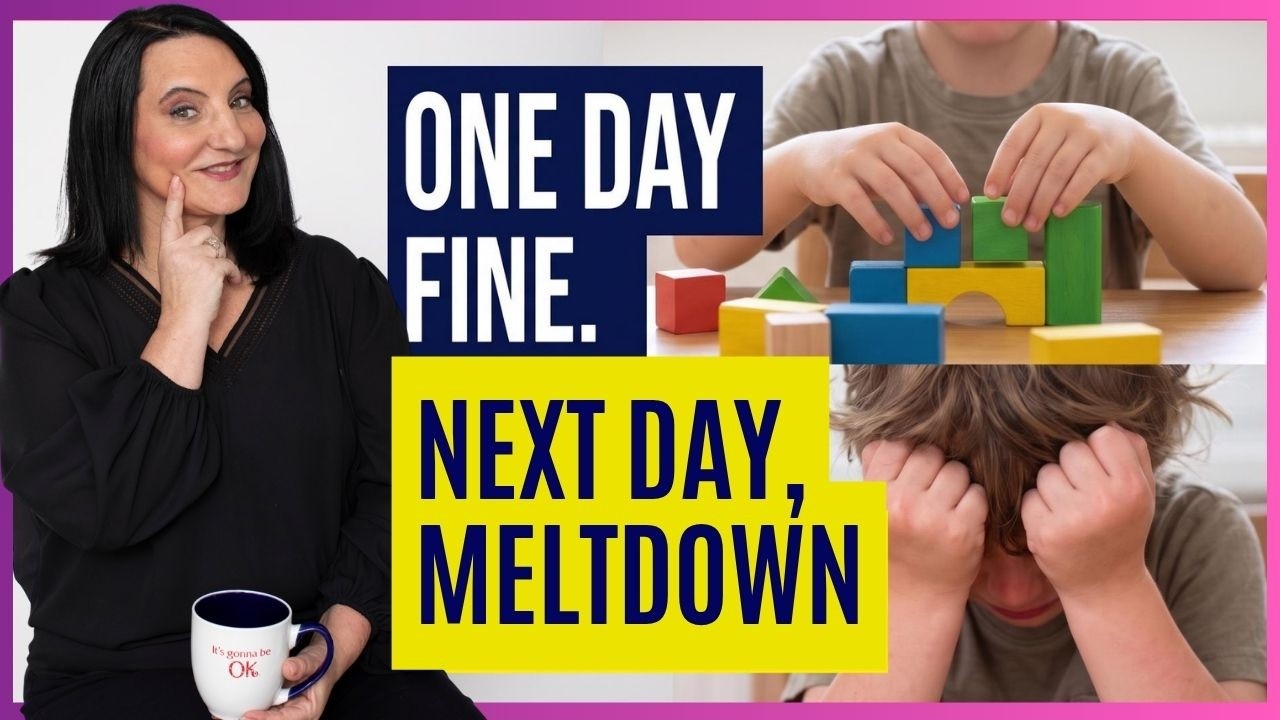
One of the clearest signs of emotional dysregulation is having huge reactions to seemingly small situations.
You might see your child melt down over:
- A broken crayon
- The wrong-colored cup
- A small mistake
- Being asked to finish homework
- A change in plans
These reactions often feel disproportionate because the nervous system is already overwhelmed.
What This Looks Like
For younger children:
- Temper tantrums
- Crying spells
- Screaming
For older children:
- Irritability
- Anger
- Withdrawal
- Emotional shutdowns
What It Really Means
These moments often signal challenges with:
- Emotional regulation
- Self-control
- Coping skills
- Nervous system regulation
When we understand emotional dysregulation in children, we stop viewing these moments as intentional defiance and start seeing them as opportunities for support.
Why does my child stay upset long after a problem is solved?
Some children seem unable to let things go.
Even after the issue is resolved, they remain stuck in the emotional experience.
This is another one of the common signs of emotional dysregulation.
What Happens During a Stress Loop?
The nervous system remains activated, causing children to:
- Replay events repeatedly
- Stay emotionally reactive
- Struggle to move on
- Reject reassurance
The issue isn't stubbornness.
The issue is that their brain is having difficulty returning to a regulated state.
What Helps?
Co-regulation is often the most effective response.
Try:
- Speaking softly
- Slowing your movements
- Staying physically present
- Modeling calm breathing
🗣️ “Your child isn’t choosing to stay upset. They’re stuck in a stress loop. When you calm your own nervous system, you give their brain the roadmap back to regulation.” — Dr. Roseann
This is one of the core principles of Regulation First Parenting®.
Why does my child reject comfort when they're upset?
Many parents feel hurt when they try to comfort their child and get pushed away.
A dysregulated child may:
- Refuse hugs
- Yell "leave me alone"
- Push you away
- Say hurtful things
While it feels personal, it usually isn't.
What's Really Happening?
When the nervous system is flooded:
- The brain cannot process additional input.
- Comfort feels overwhelming.
- Connection becomes difficult.
Children often need space before they can reconnect.
What Helps?
- Don't take it personally.
- Stay nearby without forcing interaction.
- Keep your voice calm.
- Let them know you're available.
One of the most effective regulation techniques for kids is knowing that connection remains available without demanding it.
Yelling less and staying calm isn't about being perfect. It's about having the right tools.
Join the Dysregulation Insider VIP list and get your FREE Regulation Rescue Kit, designed to help you handle oppositional behaviors without losing it.
Download it now at www.drroseann.com/newsletter
Why does my child get aggressive or shut down?
Aggression and withdrawal are two different survival responses.
Both are important signs of emotional dysregulation.
Fight Response
May include:
- Yelling
- Hitting
- Kicking
- Throwing objects
- Verbal aggression
Freeze Response
May include:
- Hiding
- Withdrawing
- Refusing to engage
- Zoning out
- Emotional shutdown
Neither response is a calculated choice.
Both are signs that the nervous system feels unsafe.
What Helps?
Instead of increasing punishment:
- Focus on regulation first.
- Reduce stimulation.
- Create emotional safety.
- Teach skills after calm returns.
Remember:
Calm the brain first.
Everything else follows.
Why does my child melt down during transitions or when hungry?
Transitions are one of the biggest triggers for dysregulated children.
You may notice behavior worsening when your child is:
- Hungry
- Tired
- Overstimulated
- Leaving a preferred activity
- Entering a new environment
Common Transition Triggers
- Leaving screen time
- Starting homework
- Bedtime routines
- Morning routines
- Moving between activities
These situations place additional demands on a nervous system that may already be struggling.
What to Look Forself
If your child's behavior consistently worsens during:
- Hunger
- Fatigue
- Sensory overload
You're likely looking at nervous system dysregulation rather than defiance.
This is why Regulation First Parenting® focuses on supporting the body before addressing behavior.
How can I help my child regulate before meltdowns happen?
The most effective approach is prevention.
Children build regulation skills through consistent support, not during the middle of a meltdown.
Helpful regulation techniques for kids include:
Daily Movement
- Walking
- Jumping
- Stretching
- Outdoor play
Predictable Routines
- Consistent wake times
- Regular meals
- Structured transitions
Sensory Supports
- Noise-reducing headphones
- Fidget tools
- Calm-down spaces
Co-Regulation
- Calm presence
- Slow breathing
- Emotional validation
Over time, these strategies strengthen emotional resilience and reduce the intensity of dysregulation.
Final Thoughts
Recognizing the signs of emotional dysregulation changes everything.
When we stop asking:
"Why is my child being difficult?"
And start asking:
"What is my child's nervous system trying to tell me?"
We create space for real change.
Remember:
- Behavior is communication.
- Emotional dysregulation in children is not defiance.
- Regulation comes before correction.
- Calm the brain first.
Parenting a dysregulated child is hard, but there is hope.
With the right support, skills, and understanding, children can learn to regulate, recover, and thrive.
Every child's journey is different.
That's why cookie-cutter solutions don't work.
Take the free Solution Matcher™ Quiz and get a customized path to support your child's emotional and behavioral needs.
Start today at www.drroseann.com/help
Calm doesn't come from hoping. It comes from the right tools.
Quick Calm helps you bring peace back to your home in just one week.
Learn more at drroseann.com/quickcalm
FAQs
How can I help my child calm down fast?
Start with co-regulation. Stay calm, lower your voice, and use movement, sensory supports, or breathing exercises to help your child's nervous system settle.
Is my child's anger a sign of oppositional defiant disorder (ODD)?
Not necessarily. Anger is often a sign of overwhelm, stress, or dysregulation rather than intentional defiance.
Why doesn't punishment work with my child?
Punishment targets behavior. Dysregulation originates in the nervous system. Until the brain feels safe and regulated, learning and behavior change are much harder to achieve.
Dr. Roseann Capanna-Hodge is a licensed therapist, certified school psychologist, and leading expert in emotional dysregulation in children. With over 30 years of experience, she helps parents understand the root causes of meltdowns, anxiety, ADHD, and challenging behavior through the lens of nervous system regulation. Dr. Roseann teaches practical, science-backed strategies for co-regulation and how to calm a dysregulated child using her Regulation First Parenting® approach. She is the host of the Dysregulated Kids Podcast and author of The Dysregulated Kid.
When you’re dealing with 5 signs your child is emotionally dysregulated (not defiant!), it’s easy to focus on the behavior or symptom you can see and miss what’s happening underneath.
In The Dysregulated Kid®, I help parents look beneath symptoms and behavior to understand what the brain and nervous system are communicating. You’ll learn practical Regulation First Parenting® tools to regulate first, reduce unnecessary escalation, and build the calm, connection, and capacity your child needs for lasting change. Get The Dysregulated Kid® at dysregulatedkid.com.
Dr. Roseann Capanna-Hodge
Emotional Dysregulation in Children & Nervous System Expert
Regulation First Parenting® | CALMS Protocol™
Host of the Dysregulated Kids Podcast (Top 1% Globally)
Author of The Dysregulated Kid

Find this helpful? Leave us a review!
Your feedback helps more overwhelmed parents find calm, clarity, and the proven tools that make everyday life easier.
Dr. Roseann Capanna-Hodge: Helping Families of Dysregulated Kids Thrive Through Regulation First Parenting®
As the creator of Regulation First Parenting®, she’s helping families of dysregulated kids discover a compassionate, brain-based path forward. Through The Dysregulated Kids™ Podcast (top 2% globally), she offers practical strategies that help parents understand their child’s brain and support lasting change.
Through The Global Institute of Children’s Mental Health and Dr. Roseann, LLC, she’s created resources like the Neurotastic® Brain Formulas and the Regulation First Parenting® framework—meeting families where they are and supporting them through challenges like ADHD, anxiety, OCD, PANS/PANDAS, and behavioral struggles.
Recognized by Forbes as “a thought leader in children’s mental health,” Dr. Roseann is changing how we understand emotional dysregulation in children—one family at a time.