
Join the Dysregulation Insider get free calm parenting tips straight to your inbox!
YES, I'M IN!Why Does My Kid Trigger Me So Much? | Co-Regulation Parenting | E188





Estimated Reading Time: 8 Minutes
If you've ever wondered: "Why does my child trigger me so much?"
You're not alone.
The answer often has less to do with your child and more to do with your own nervous system, stress levels, and emotional history.
That doesn't mean you're a bad parent.
It means you're human.
In this episode, I explain why certain child behaviors feel so triggering, how nervous system regulation impacts parenting, and what parents can do to stay calmer, more connected, and more resilient.
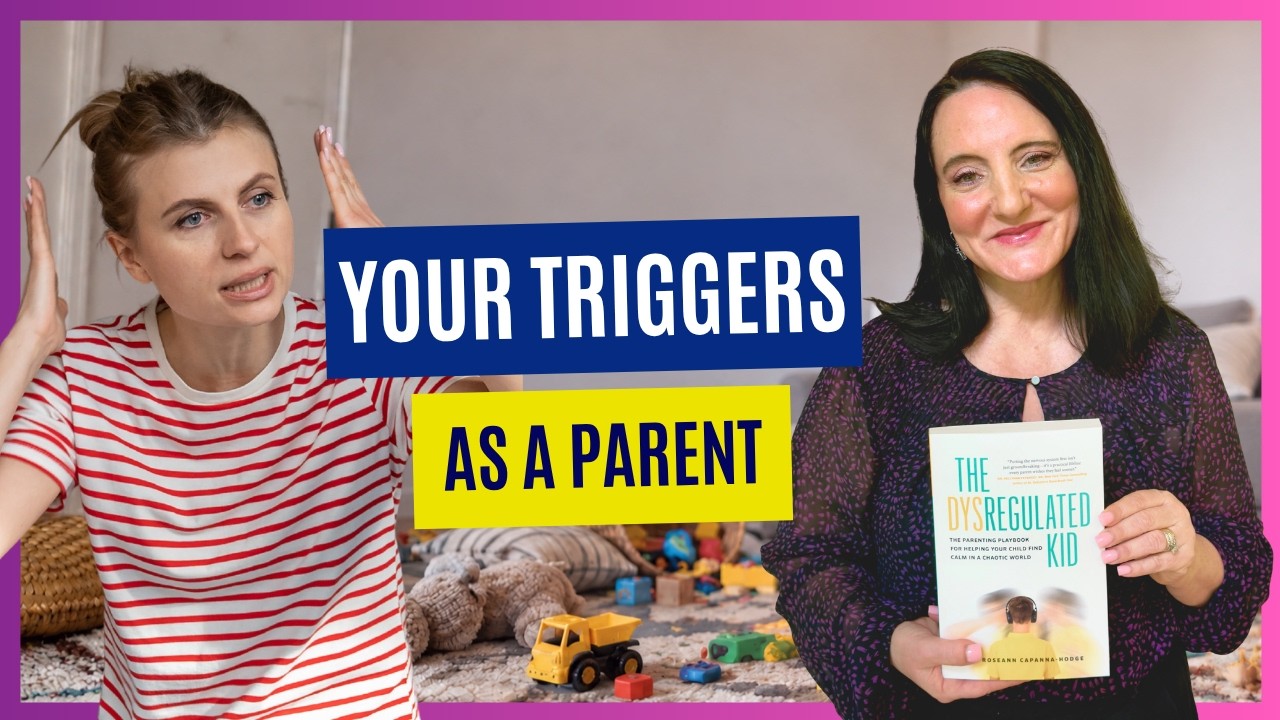
Why do children trigger parents so deeply?
Parenting activates some of our deepest emotions.
Why?
Children challenge us in ways that few other relationships do.
They can trigger:
- Fear
- Frustration
- Helplessness
- Anxiety
- Shame
- Past wounds
The Nervous System Connection
When your child's behavior activates your stress response, your nervous system shifts into survival mode.
That's when reactions become bigger than the situation itself.
Real-Life Example
A child procrastinates on homework.
The parent feels immediate anger.
The anger isn't just about homework.
It may be connected to fears about the child's future, past experiences, or unmet expectations.
What behaviors trigger parents most?
While every family is different, some triggers show up repeatedly.
Common Parenting Triggers
- Disrespectful language
- Arguing
- Lying
- Homework avoidance
- Screen time battles
- Messes
- Defiance
- Public outbursts
- Lack of gratitude
Why These Behaviors Feel So Intense
These behaviors often touch deeper fears, including:
- Fear of failure
- Fear of judgment
- Fear for the future
- Fear of losing control
The behavior is rarely the whole story.
Why do neurodivergent children trigger parents differently?
Parents of children with:
- ADHD
- Anxiety
- Autism
- OCD
- PANS/PANDAS
- Emotional dysregulation
often experience higher levels of stress.
Why?
These children frequently require:
- More support
- More advocacy
- More patience
- More emotional regulation
Real-Life Example
A parent spends hours helping a child manage anxiety, only to be met with resistance or anger.
That level of chronic stress takes a toll.
Important Reminder
Challenging behavior does not mean you're failing.
It often means your child is struggling.
🗣️ "In a world where parental stress is at an all-time high, prioritizing self-care is essential, especially when facing challenges like ADHD or anxiety in our children." — Dr. Roseann
Need help regulating your own nervous system?
The Regulation Rescue Kit provides practical Regulation First Parenting® tools that help reduce stress, improve emotional regulation, and create more peace at home. Become a Dysregulation Insider VIP and get your FREE kit: www.drroseann.com/newsletter
How does your own history affect parenting?
One of the most overlooked reasons parents feel triggered is unresolved personal experiences.
Common Sources
- Childhood trauma
- Family conflict
- Past criticism
- Unmet emotional needs
Why It Matters
When a child's behavior resembles something painful from your past, your nervous system may react automatically.
Real-Life Example
A parent who grew up in a chaotic household may feel especially triggered by loud arguments or emotional outbursts.
The present moment activates old stress responses.
Why is self-regulation so important?
You cannot co-regulate a child from a dysregulated state.
What Is Self-Regulation?
Self-regulation is the ability to:
- Manage emotions
- Stay calm under stress
- Pause before reacting
Why It Matters
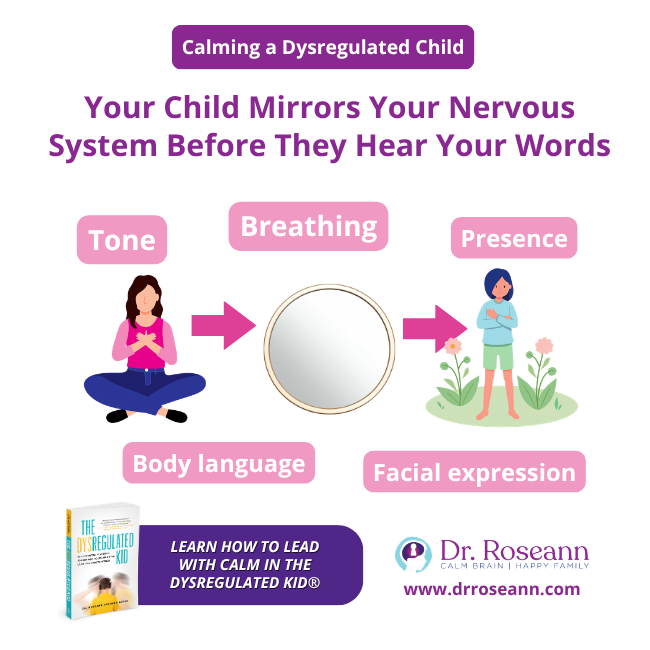
Children borrow calm from regulated adults.
Your nervous system directly influences theirs.
Regulation First Parenting®
That's why I always teach:
Parent regulation comes first.
Then co-regulation.
Then connection.
Then correction.
How can parents calm their own nervous systems?
The first step is recognizing that self-care isn't selfish.
It's essential.
Helpful Regulation Strategies
Deep Breathing
Simple breathing exercises help calm the nervous system.
Movement
Walking, stretching, and exercise help discharge stress.
Sleep
A tired parent has less emotional bandwidth.
Connection
Talking with supportive people reduces stress.
Real-Life Example
A parent takes a five-minute walk before addressing a conflict with their child.
That brief pause changes the entire interaction.
Why do expectations matter?
Many parenting triggers come from unrealistic expectations.
The Trap
Parents often expect:
- Immediate improvement
- Consistent progress
- Perfect behavior
The Reality
Growth is messy.
Children develop gradually.
Helpful Shift
Focus on:
- Progress
- Effort
- Small wins
instead of perfection.
Why This Matters
When expectations become more realistic, stress decreases.
How does judgment increase parenting stress?
Many parents feel judged.
By:
- Family members
- Teachers
- Friends
- Social media
The Problem
External judgment often increases internal pressure.
What Helps
Focus on:
- Your child
- Your values
- Your family's needs
Every child is different.
Every family is different.
Comparison rarely helps.
Why is support so important?
Parents aren't meant to do this alone.
Build Your Support System
Support may include:
- Therapists
- Parent groups
- Friends
- Coaches
- Family members
Why It Matters
Co-regulation isn't just for children.
Adults need it too.
Supportive relationships help regulate stressed nervous systems.
What happens when parents regulate first?
Everything changes.
Benefits Include
- Less yelling
- Better communication
- Stronger relationships
- Reduced power struggles
- More confidence
Real-Life Example
Instead of reacting immediately to a child's behavior, a parent pauses, regulates, and responds intentionally.
The outcome is completely different.
Takeaway & What's Next
Your child's behavior isn't happening in a vacuum.
Neither are your reactions.
Your child isn't giving you a hard time.
They're having a hard time.
And sometimes, so are you.
When parents regulate their own nervous systems, parenting becomes easier, relationships become stronger, and children benefit enormously.
Remember:
- Self-care matters.
- Regulation comes first.
- Triggers are information.
- Progress matters more than perfection.
It's gonna be OK.
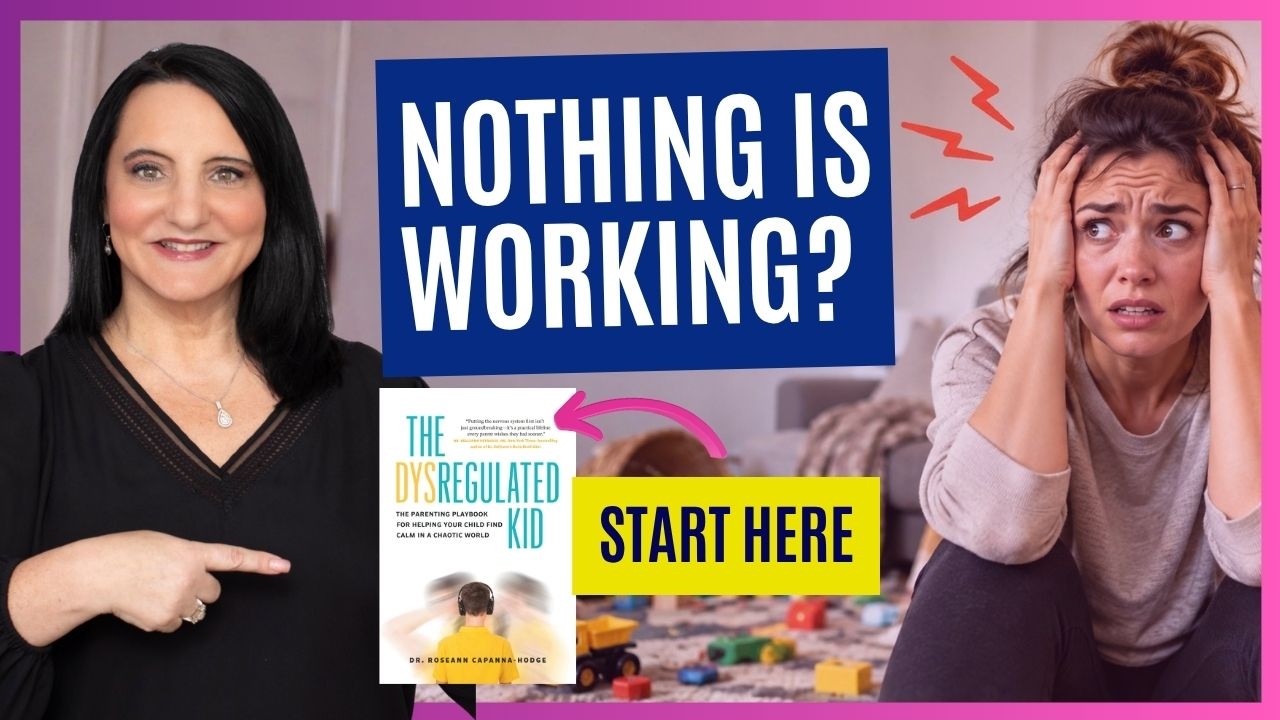
You can know exactly how you want to parent and still lose access to those skills when your own nervous system gets triggered. The Dysregulated Kid® helps you regulate yourself first, interrupt the escalation cycle, and respond with more calm and intention when parenting gets hard. Get The Dysregulated Kid® at dysregulatedkid.com.
FAQs
Why does my child's behavior trigger me so much?
Children often activate our deepest fears, stress responses, and unresolved experiences. Parenting is one of the most emotionally demanding roles we have.
Is it normal to feel overwhelmed by parenting?
Absolutely. Parenting is challenging, especially when children struggle with emotional, behavioral, or developmental issues.
How can I stop reacting emotionally to my child's behavior?
Focus on regulating your own nervous system first through breathing, movement, self-awareness, and support.
What are the most common parenting triggers?
Disrespect, arguing, lying, homework battles, screen time issues, messes, and defiance are among the most common triggers.
Can self-regulation improve my child's behavior?
Yes. Children often mirror the emotional state of the adults around them. Parent regulation is one of the most powerful interventions available.
Not sure where to start?
Use the Solution Matcher to get personalized recommendations based on your child's emotional and behavioral needs. Start here: www.drroseann.com/help
Dr. Roseann Capanna-Hodge is a licensed therapist, certified school psychologist, and leading expert in emotional dysregulation in children. With over 30 years of experience, she helps parents understand the root causes of meltdowns, anxiety, ADHD, autism, learning differences, and challenging behavior through the lens of nervous system regulation. She is the creator of Regulation First Parenting®, host of the Dysregulated Kids Podcast, and author of The Dysregulated Kid.
Dr. Roseann Capanna-Hodge
Emotional Dysregulation in Children & Nervous System Expert
Regulation First Parenting® | CALMS Protocol™
Host of the Dysregulated Kids Podcast (Top 1% Globally)
Author of The Dysregulated Kid

Find this helpful? Leave us a review!
Your feedback helps more overwhelmed parents find calm, clarity, and the proven tools that make everyday life easier.
Dr. Roseann Capanna-Hodge: Helping Families of Dysregulated Kids Thrive Through Regulation First Parenting®
As the creator of Regulation First Parenting®, she’s helping families of dysregulated kids discover a compassionate, brain-based path forward. Through The Dysregulated Kids™ Podcast (top 2% globally), she offers practical strategies that help parents understand their child’s brain and support lasting change.
Through The Global Institute of Children’s Mental Health and Dr. Roseann, LLC, she’s created resources like the Neurotastic® Brain Formulas and the Regulation First Parenting® framework—meeting families where they are and supporting them through challenges like ADHD, anxiety, OCD, PANS/PANDAS, and behavioral struggles.
Recognized by Forbes as “a thought leader in children’s mental health,” Dr. Roseann is changing how we understand emotional dysregulation in children—one family at a time.