




Estimated reading time: 18 minutes
ADHD medication for kids includes two main groups: stimulants, such as methylphenidate and amphetamine medicines, and non-stimulants, such as atomoxetine, extended-release guanfacine, extended-release clonidine, and viloxazine extended-release (Biederman et al., 2007, 2008; Greenhill et al., 2002; Jain et al., 2011; Michelson et al., 2001; Nasser et al., 2020). Each option has different features, potential benefits, and side effects to discuss with your child’s prescriber.
If your child’s provider has mentioned a medication, you may be wondering: “What does it do? How is it different from the other options? What should I watch for?” Those questions are a useful place to start. And if the names are starting to blur together, let’s slow down—this is a conversation about your child, not a medication spelling bee.
Let’s walk through the common ADHD medications, short- and long-acting forms, and factors that help guide treatment choices. We’ll take it one piece at a time, with your child’s everyday experience at the center of the conversation.
I’m Dr. Roseann Capanna-Hodge, a licensed therapist, certified school psychologist, and author of The Dysregulated Kid. For more than 30 years, I’ve supported children and families navigating attention, behavior, and emotional challenges. Let’s start with the medication options, then look at how your child’s prescriber chooses among them and what to watch for along the way.
What Types of ADHD Medication Are Available for Kids?
There are two main categories: stimulants and non-stimulants. Within those groups, there are different ingredients and formulations. The table below uses the ingredient and formulation names studied in the research. Think of this as getting the names straight before we sort through the options.
Common ADHD Medications for Kids: Comparison Table
The following medicines have been investigated in primary pediatric clinical trials. This table summarizes study findings; it does not rank medicines or give prescribing instructions.
| Medication group | Ingredient / formulation studied | What the research found |
|---|---|---|
| Stimulant | Immediate-release methylphenidate | A preschool trial found greater symptom reduction than placebo; this does not establish prescribing eligibility (Greenhill, Kollins, et al., 2006) |
| Stimulant | Modified-release methylphenidate | A trial in children aged 6–16 found improved parent- and teacher-rated symptoms versus placebo (Greenhill et al., 2002) |
| Stimulant | Extended-release dexmethylphenidate | A trial in children and adolescents aged 6–17 found improved teacher-rated symptoms versus placebo (Greenhill, Muniz, et al., 2006) |
| Stimulant | Lisdexamfetamine; mixed amphetamine salts extended-release | A classroom crossover trial included both formulations and found lisdexamfetamine improved attention and performance versus placebo (Biederman et al., 2007) |
| Non-stimulant | Atomoxetine | Placebo-controlled trials found improvements in ADHD symptoms over six to eight weeks (Michelson et al., 2001, 2002) |
| Non-stimulant | Guanfacine extended-release | An eight-week trial found improved ADHD symptom scores versus placebo; sleepiness and fatigue were reported (Biederman et al., 2008) |
| Non-stimulant | Clonidine extended-release | An eight-week trial found improved ADHD symptom scores versus placebo; sleepiness was commonly reported (Jain et al., 2011) |
| Non-stimulant | Viloxazine extended-release | A six-week trial in children aged 6–11 found improved ADHD symptom scores versus placebo (Nasser et al., 2020) |
(Note: These are examples investigated in pediatric ADHD research, not a complete list or a recommendation for your child. Study ages are not the same as prescribing eligibility. Ask the prescriber and pharmacist to confirm the exact formulation and instructions for your child.)
Brand Names You May Recognize
You may recognize the brand name on a prescription before you recognize the ingredient name. A published analysis of pediatric ADHD medication development identifies these ingredient–brand relationships (Bourgeois et al., 2014):
- Methylphenidate: Ritalin, Concerta, and Quillivant XR.
- Dexmethylphenidate: Focalin.
- Mixed amphetamine salts: Adderall.
- Lisdexamfetamine: Vyvanse.
- Atomoxetine: Strattera.
- Guanfacine extended-release: Intuniv.
- Clonidine extended-release: Kapvay.
This historical research identifies the names; it does not establish current availability, prescribing ages, or instructions. Bring the exact ingredient, brand, and formulation to your pharmacist. Similar names are not a reason to swap products yourself.
Stimulant Medications
The stimulant trials discussed here studied methylphenidate-based and amphetamine-based medicines (Biederman et al., 2007; Greenhill et al., 2002; Greenhill, Kollins, et al., 2006; Greenhill, Muniz, et al., 2006). These trials provide evidence for symptom improvement in the children enrolled; they do not guarantee the same response for your child.
Ask how the prescriber will assess your child’s response and make any adjustments. Your neighbor’s “this worked wonders” story may be encouraging, but your child needs a plan based on their own response.
For another discussion of the treatment experience, read What does Adderall feel like with ADHD?
Non-Stimulant Medications
Placebo-controlled trials have investigated atomoxetine, extended-release guanfacine, extended-release clonidine, and extended-release viloxazine (Biederman et al., 2008; Jain et al., 2011; Michelson et al., 2001, 2002; Nasser et al., 2020). Their results come from different studies with different participants and follow-up periods, so comparing the results does not establish which medicine is best for a particular child.
Ask whether a non-stimulant is appropriate for your child and what evidence supports the proposed plan.
Non-stimulant does not mean side-effect-free. Each option has its own safety information and follow-up needs.
Short-Acting vs Long-Acting ADHD Medication
The research includes immediate-release and modified- or extended-release formulations. For example, the preschool methylphenidate trial studied immediate-release treatment, while a separate school-age trial tested once-daily modified-release methylphenidate (Greenhill et al., 2002; Greenhill, Kollins, et al., 2006).
Those studies do not establish one coverage schedule for every product or child. Bring this practical question to the appointment:
“Are we trying to support the school day, homework time, or both—and what evidence supports the formulation you recommend?”
What If My Child Has Trouble Swallowing Pills?
Tell the prescriber and pharmacist about swallowing difficulties before choosing a formulation. One randomized classroom study tested an extended-release liquid methylphenidate formulation in children aged 6–12 and found improvement compared with placebo (Wigal et al., 2013). That finding concerns the studied formulation; it does not make every liquid product interchangeable.
Ask:
“What form can my child take safely, and how should we give it?”
Ask the pharmacist before crushing, splitting, or opening any prescribed medicine. This article does not provide product-specific administration instructions.
What Parents Should Know
Ask your prescriber:
“Why are you recommending this medication and formulation for my child, and what would tell us it is helping?”
You should leave knowing the treatment goal, what to watch for, and when you will check in again.
How Is an ADHD Medication Chosen for My Child?
There is no single best ADHD medication for every child. Choosing an option involves your child’s age, medical history, symptoms, other medicines, daily schedule, and response to treatment.
Ask your provider to walk you through the reasoning behind the recommendation. A familiar brand name is not enough to tell you whether a medicine fits your child. We’re supporting a child, not shopping for the most popular prescription.
Consider bringing these questions:
- What difficulties are we trying to address?
- What benefit should we expect, and when?
- Which side effects require a call?
- What behavioral or school support should accompany treatment?
- When will we review whether the plan is working?
- What are the next options if this approach does not fit?
You might say:
“I’m open to understanding the options. I want us to make a plan that helps my child function better and takes their comfort seriously.”
My regulation-first approach means making room for your child’s comfort, routines, relationships, and coping skills when we discuss treatment. When I say, “Calm the brain first,” I’m describing that parenting priority—not a promise that one approach will resolve every ADHD difficulty.
You do not have to choose between supporting regulation and discussing medication. You can bring both priorities to the same appointment. There is no parenting trophy for handling every challenge alone. Ask questions, use your team, and keep your child’s needs at the center.
How Do ADHD Medications Work in the Brain?
Different medicines have different pharmacological actions. The atomoxetine dose-response trial describes its proposed action as blocking the norepinephrine transporter (Michelson et al., 2001). The lisdexamfetamine classroom trial describes it as a prodrug converted into active dextroamphetamine in the body (Biederman et al., 2007).
But an explanation of a medicine’s action does not tell us how much it will help a particular child. For that, we look at measured outcomes in clinical studies and then review the child’s response with the prescriber.
A useful appointment question is:
“What changes should we expect to see in daily life, and how will we measure them?”
We do not need to describe ADHD as a simple chemical deficiency to talk clearly about treatment.

What Are the Short-Term Benefits of ADHD Medication?
Primary randomized trials have found reductions in ADHD symptom ratings with the medicines discussed above (Biederman et al., 2007, 2008; Greenhill et al., 2002; Greenhill, Kollins, et al., 2006; Greenhill, Muniz, et al., 2006; Jain et al., 2011; Michelson et al., 2001, 2002; Nasser et al., 2020). In the 14-month MTA trial, carefully managed medication and combined medication–behavioral treatment produced greater improvement in core ADHD symptoms than intensive behavioral treatment or community care (MTA Cooperative Group, 1999).
The combined treatment did not outperform medication management on core ADHD symptoms, although it showed advantages over behavioral treatment or community care on some other outcomes (MTA Cooperative Group, 1999). Symptom improvement and broader daily functioning are related questions, not interchangeable results.
When you discuss progress, look beyond whether your child is sitting quietly. The goal isn’t to turn your child into a perfectly still little statue. What matters in your family’s day?
Perhaps your goal is:
- Starting an assignment with fewer reminders.
- Participating in class without constant frustration.
- Having an easier conversation with a friend.
- Feeling less overwhelmed by everyday expectations.
These are goals to discuss, not promised results.
Medication does not replace the opportunity to learn skills, receive support, and feel understood. Ask how the treatment plan will address those needs, too.
Illustrative Example: Better Focus at School, Less Appetite at Home
Consider Sarah, the parent of a 9-year-old whose teacher notices better focus after he starts a stimulant. At home, Sarah notices that he is eating less.
Both observations matter. The school improvement does not cancel out the appetite concern, and the appetite concern does not mean Sarah has done something wrong. Bringing both to the prescriber helps the family discuss benefits and side effects together.
She might say: “His teacher is seeing better focus, but he is eating less at home. How should we assess that, and what do you recommend?”
What Side Effects Should Parents Watch Out For?
Side effects vary by medication and formulation. Read the patient information for your child’s actual prescription rather than assuming every ADHD medicine has the same risks.
Side Effects Reported in Pediatric Trials
In the modified-release methylphenidate trial, reported adverse events included reduced appetite, headache, abdominal pain, and insomnia. Reduced appetite was the only one of those events significantly more frequent than with placebo in that study (Greenhill et al., 2002). Reporting a symptom during treatment does not automatically prove the medicine caused it.
In the guanfacine trial, reported events included sleepiness, fatigue, headache, upper abdominal pain, and sedation (Biederman et al., 2008). Sleepiness was commonly reported in the clonidine trial (Jain et al., 2011). In the viloxazine trial, commonly reported events included sleepiness, reduced appetite, and headache (Nasser et al., 2020).
These are study-specific examples, not a complete safety list. Do not assume a side effect reported for one medicine applies equally to another.
You know the everyday details: the lunch that comes home untouched, the bedtime that keeps getting later. If something seems different, describe it clearly to the prescriber: “Since starting treatment, lunch has been difficult and bedtime has moved later. What should we do next?”
What About Mood Changes or Tics?
If your child seems unusually sad, irritable, anxious, withdrawn, or unlike themselves, bring that observation to the prescriber. Record when it happens and what else is going on rather than assuming one explanation.
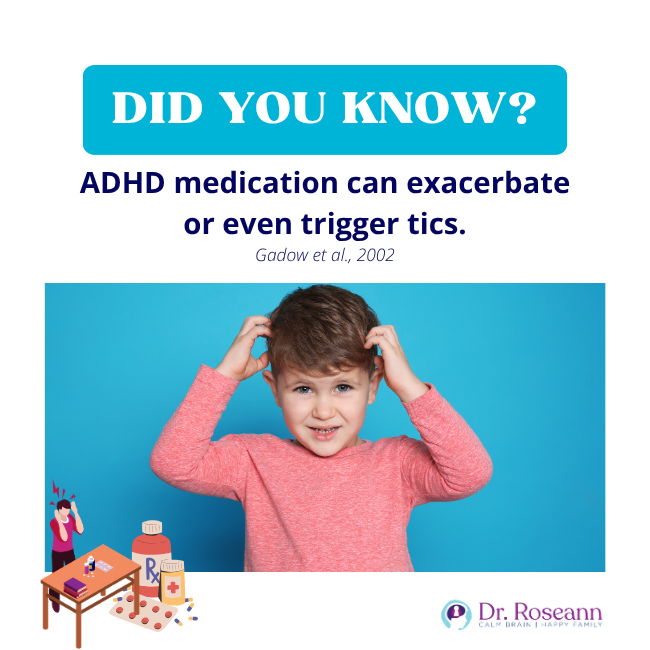
The original medication conversation also raises tics—repeated movements or sounds. In a randomized trial involving children with ADHD and a chronic tic disorder, the findings did not support routinely avoiding methylphenidate because of concerns about worsening tics (Tourette’s Syndrome Study Group, 2002). That result does not predict every child’s response. Tell the clinician about existing tics and any changes you notice.
Related reading: Could ADHD medication cause mood swings and aggression?
More Serious Risks
Large observational studies can help investigate uncommon outcomes, but they have limits. A cohort study of young people aged 2–24 did not find an increased rate of serious cardiovascular events among current ADHD-medication users. Its uncertainty still allowed for increased risk, so this does not establish that treatment is risk-free for every child (Cooper et al., 2011).
An observational study comparing atomoxetine with stimulants in children and adolescents did not find a statistically significant increase in suicide or suicide attempts with atomoxetine. The wide uncertainty and limited ability to assess high-risk groups mean it cannot rule out every concern or answer the separate question of suicidal thoughts (Linden et al., 2016).
A primary safety investigation of atomoxetine trial data and spontaneous reports identified liver-injury reports judged probably related to treatment (Bangs et al., 2008). Spontaneous reports cannot establish how often a reaction occurs. The investigators advised discontinuation in patients with jaundice or laboratory evidence of liver injury; seek prompt medical assessment rather than managing this yourself (Bangs et al., 2008).
Ask your prescriber and pharmacist which warning signs require urgent action for the actual prescription. Seek emergency help for an immediate threat to your child’s safety, including severe breathing difficulty, collapse, or suicidal intent.
If your child also takes an SSRI, bring that prescription to the medication review. Related reading: SSRI medication side effects in children
Are There Long-Term Risks of ADHD Medication for Kids?
Long-term growth findings are mixed. An observational follow-up of MTA participants associated extended stimulant use with lower adult height (Swanson et al., 2017). A separate 2026 retrospective cohort, which accounted for familial height potential, found clinically negligible height differences associated with stimulant treatment (Gabbay et al., 2026).
Neither observational analysis can establish cause and effect by itself. The studies also used different populations and methods. A reasonable question for your prescriber is:
“How will we track growth, appetite, and whether treatment is still helping?”
The guanfacine trial also assessed blood pressure and pulse, reporting small changes during its eight-week observation period (Biederman et al., 2008). Short trials cannot settle every long-term safety question.
If a dose change is proposed, ask why and how its effects will be assessed rather than assuming it proves tolerance.
Your child’s experience belongs in the conversation, too:
“What feels easier since starting this medicine? Is anything bothering you?”
Try to make room for an honest answer. A child who says, “I don’t like how I feel,” is giving you information worth bringing to the appointment. Listening is part of the plan, even when the answer is inconvenient.
What About Tolerance, Stigma, or Later Substance Use?
If a dose is being changed, ask what the clinician is responding to. A larger dose is not, by itself, proof that your child has become tolerant or dependent.
Make room for how your child feels about treatment, too:
“Does taking medicine bother you? Is anyone making comments? What would make this feel more comfortable?”
A prescription should not become your child’s identity. They’re still the same child who loves dinosaurs, tells elaborate stories, or remembers every Pokémon name while forgetting their shoes.
For later substance use, a 16-year observational analysis of MTA participants found no evidence that stimulant treatment was associated with either increased or decreased later substance use after accounting for measured confounding factors (Molina et al., 2023). This finding does not prove zero risk for every child, and it does not support a blanket claim that medication prevents substance misuse.
Ask about secure storage, sharing, and taking only the prescribed medicine. Keep the conversation open as your child gets older.
For more discussion of this concern, read How addictive is Adderall in teens and children?
Managing Side Effects of ADHD Medication
You do not have to turn family life into a research project. A few brief notes can help you explain what you are noticing. A sentence on your phone is fine—no color-coded binder required.
| What to record | Example |
|---|---|
| The change | “Less interested in lunch” |
| When it happens | “Around midday on school days” |
| How it affects your child | “Hungry and upset after school” |
Bring those observations to the prescriber, who can assess whether the medication, dose, timing, or another factor needs attention.
Everyday Observations to Bring to the Prescriber
You can be a useful detective without turning every meal into an investigation. Try these practical prompts:
| Area to notice | What to record | Question to bring |
|---|---|---|
| Meals and appetite | Meals skipped, lunch returned, hunger later in the day | “Should we review the medicine or get help planning meals?” |
| Sleep | Bedtime, time to fall asleep, night waking, morning tiredness | “What might be contributing, and would sleep support help?” |
| Mood and timing | When your child seems upset, withdrawn, or unusually irritable | “Could treatment timing or another issue explain this pattern?” |
| Growth | Concerns to review with the clinician’s measurements | “How is growth tracking over time?” |
| School and home | Specific tasks that are easier or harder | “Are the benefits showing up where my child needs them?” |
Keep offering meals, water, opportunities to move, and a predictable bedtime. These are everyday care priorities; they are not presented as proven remedies for medication side effects. Ask before using supplements, changing treatment, or trying to compensate for symptoms yourself.
Include your child’s teacher in the conversation when appropriate. School and home place different demands on a child, so ask for specific observations rather than simply, “Was today better?”
You might ask: “Is it easier for my child to start work, follow instructions, or participate with classmates? Are you noticing any difficulties?”
Your own notes and your child’s account add another part of the picture. An easier morning at school and a difficult afternoon at home are both worth discussing.
Discuss any dose change or stopping plan with the prescriber. A published pediatric case report described a hypertensive crisis following clonidine withdrawal (Cao et al., 2022). A case report cannot tell us how often this happens, but it is a reason to take stopping instructions seriously. Ask for instructions specific to your child’s medicine.
Keep medications securely stored and never share a prescription with another person.
For more discussion, read The Dangers of Medication: Complete Safety Guide for Parents.
Are There Natural or Non-Medication Alternatives for ADHD?
It is reasonable to ask what support is available beyond medication. The MTA trial tested an intensive behavioral program involving parent, school, and child components, as well as a combined medication–behavioral approach (MTA Cooperative Group, 1999). Your child still has homework, friendships, transitions, and big feelings to navigate; the plan needs room for those everyday realities.
That trial does not establish a universal treatment sequence for every age. The separate preschool methylphenidate trial enrolled children aged 3–5.5 and found symptom improvement compared with placebo (Greenhill, Kollins, et al., 2006). Its results should not be treated as a prescribing-age rule or proof that medication should come first.
Sleep and Daily Routines Deserve Attention
A randomized trial in children with ADHD and sleep problems found that a brief behavioral sleep intervention improved sleep and modestly improved parent-rated ADHD symptoms. Most participants were already taking stimulant medication (Hiscock et al., 2015). Sleep support can be part of the plan without becoming a claim that it replaces medication. Ask for help building a bedtime routine your family can actually use. The plan that works on paper but requires three adults and a silent house may need a little adjusting.
Bring questions about movement, meals, and daily routines to the treatment team, too. Avoid assuming a colorful plate, extra water, or a supplement will treat ADHD or cancel out a medicine’s adverse effects.
If you are considering neurofeedback, supplements, or PEMF, ask for primary research on the specific approach, your child’s age group, and the outcome you hope to improve.
For neurofeedback, a blinded randomized trial in children aged 7–10 compared a specific theta/beta training protocol with a matched sham treatment. Both groups improved, but the active protocol did not show a significant advantage on the primary inattention outcome at treatment end or the 13-month follow-up (Neurofeedback Collaborative Group, 2021). That finding concerns the protocol tested; it does not settle every neurofeedback method.
For supplements or PEMF, ask to see pediatric primary research supporting the specific recommendation, as well as its safety information. A treatment being described as “natural” does not tell you whether it has been adequately tested.
A Whole-Child Plan Includes Everyday Support
Ask what support your child needs in addition to symptom treatment, including parent and school support. Discuss which goals each approach addresses.
- Parent training: Ask for help with expectations, routines, and how to respond when things get difficult.
- Family support: Ask whether family sessions could help you discuss treatment concerns and divide responsibilities.
- Friendship and social difficulties: Describe specific challenges and ask whether targeted support is appropriate.
- Educational support: Ask about instructions, transitions, workload, and accommodations that could help your child participate.
These are options to discuss with the treatment team, not a claim that each approach has the same evidence or will produce the same results.
For school, ask the team what accommodations or learning support might help your child. Bring specific examples of where the school day is getting difficult.
At home, consider which part of the routine is hardest and bring that to the treatment team. Homework, transitions, meals, sleep, and friendships may need different kinds of support. You do not have to solve the whole day at once.
If you’d like to explore my parenting perspective further, you can learn more about The Dysregulated Kid. Bring the questions it raises to your child’s treatment team as you build a plan together.
You can explore Are There Natural or Non-Medication Alternatives for ADHD? as another starting point for questions to discuss with your provider.
How Do I Know if ADHD Medication Is Right for My Child?
Hope for relief and worry about risks can sit at the same kitchen table. You do not need to dismiss either one. Review the actual benefits, difficulties, and next steps with your child and their provider.
Ask yourself—and bring the answers to the appointment:
- Is my child finding school, home routines, or friendships easier?
- Are side effects interfering with eating, sleeping, comfort, or participation?
- What does my child say about the experience?
- Have we identified behavioral, school, sleep, or family support that should accompany the plan?
- Do we know when the clinician will review treatment and what would prompt an earlier call?
“I’m noticing better focus, but evenings are harder. Can we look at the whole day before deciding what comes next?”
For additional perspectives to discuss with your clinician, explore reasons parents consider not medicating ADHD in children and questions about overprescription of ADHD medication.
Illustrative Example: A Treatment Plan Can Evolve
Consider Monica, the parent of a 10-year-old who feels unsure about medication and rushed to decide. She discusses her concerns with the provider and begins with behavioral support and attention to daily routines. Later, the provider adds a low-dose stimulant to the plan. This is an example of how a plan might evolve, not a sequence every family should follow. The starting point depends on the child’s age, needs, and clinical assessment.
Adding medication does not erase the value of the support already in place. Likewise, choosing medication does not mean a parent has stopped caring about regulation, nutrition, or coping skills. The question remains: “What combination of support is helping my child, and what needs adjusting?”
Keep Your Treatment Team Involved
Whatever resources you choose, keep your child’s prescribing clinician involved in medication decisions. You are allowed to ask for a clear explanation and time to discuss your concerns.
Parent Action Steps
- Arrange a treatment discussion with your child’s qualified healthcare provider.
- Choose a few clear goals to review together.
- Ask about parent training and school support.
- Keep brief notes about benefits and concerns.
- Include your child’s perspective in age-appropriate language.
- Review supplements and other medicines with the prescriber or pharmacist before adding them.
- Treat online quizzes as conversation starters, not diagnoses.
- Use the Solution Matcher™ to explore resources, while keeping medical decisions with your healthcare team.
Related reading: Are ADHD drugs safe?
FAQs
The research reviewed here does not show that every child needs medication. Discuss your child’s difficulties, treatment goals, and response to support with the clinician. A trial result is evidence to consider, not an individual treatment decision.
The treatment goal is improved functioning. If your child seems unusually withdrawn, irritable, or unlike themselves, discuss the change with the prescriber rather than accepting it as the price of better attention.
Ask the prescriber to reassess the plan and provide medicine-specific stopping instructions. A pediatric clonidine-withdrawal case report documented a hypertensive crisis; it does not establish the frequency of that risk (Cao et al., 2022). Discuss stopping before changing treatment.
The trials measured benefit over different periods: a stimulant classroom study assessed performance during study treatment, while atomoxetine trials assessed outcomes across six to eight weeks (Biederman et al., 2007; Michelson et al., 2001, 2002). These study lengths do not establish an exact onset or time to maximum benefit for your child. Ask when and how the prescribed medicine will be evaluated.
The trials reviewed reported appetite changes, sleep difficulties, headaches, abdominal discomfort, sleepiness, or fatigue, depending on the medicine (Biederman et al., 2008; Greenhill et al., 2002; Jain et al., 2011; Nasser et al., 2020). Reported events and their frequency differed across studies. Ask about the specific prescription and report persistent or concerning changes.
Trials found improvements in teacher-rated ADHD symptoms, and a stimulant classroom trial found improvements on attention and performance measures (Biederman et al., 2007; Greenhill et al., 2002; Greenhill, Muniz, et al., 2006). Those outcomes do not guarantee better grades. Ask how school progress and learning needs will be assessed.
There is no single timeline. Review ongoing needs with the prescriber rather than assuming treatment must continue forever or end at a particular age.
Yes. The MTA trial studied combined treatment (MTA Cooperative Group, 1999). Ask which goals each part of the plan is intended to address.
The studies reviewed include preschool methylphenidate research in children aged 3–5.5 and other medication trials in school-age children and adolescents (Biederman et al., 2008; Greenhill et al., 2002; Greenhill, Kollins, et al., 2006; Greenhill, Muniz, et al., 2006; Nasser et al., 2020). Enrollment in a trial does not establish prescribing eligibility or the best first treatment. Ask the clinician about your child’s situation and the actual prescription.
References
Bangs, M. E., Jin, L., Zhang, S., Desaiah, D., Allen, A. J., Read, H. A., Regev, A., & Wernicke, J. F. (2008). Hepatic events associated with atomoxetine treatment for attention-deficit hyperactivity disorder. Drug Safety, 31(4), 345–354. https://doi.org/10.2165/00002018-200831040-00008
Biederman, J., Boellner, S. W., Childress, A., Lopez, F. A., Krishnan, S., & Zhang, Y. (2007). Lisdexamfetamine dimesylate and mixed amphetamine salts extended-release in children with ADHD: A double-blind, placebo-controlled, crossover analog classroom study. Biological Psychiatry, 62(9), 970–976. https://doi.org/10.1016/j.biopsych.2007.04.015
Biederman, J., Melmed, R. D., Patel, A., McBurnett, K., Konow, J., Lyne, A., Scherer, N., & SPD503 Study Group. (2008). A randomized, double-blind, placebo-controlled study of guanfacine extended release in children and adolescents with attention-deficit/hyperactivity disorder. Pediatrics, 121(1), e73–e84. https://doi.org/10.1542/peds.2006-3695
Bourgeois, F. T., Kim, J. M., & Mandl, K. D. (2014). Premarket safety and efficacy studies for ADHD medications in children. PLOS ONE, 9(7), Article e102249. https://doi.org/10.1371/journal.pone.0102249
Cao, C., Lorenz, M. L., Sojka, P., Brindle, A. W., & Topor, L. S. (2022). Hypertensive crisis in a pediatric patient experiencing clonidine withdrawal. Case Reports in Pediatrics, 2022, Article 9005063. https://doi.org/10.1155/2022/9005063
Cooper, W. O., Habel, L. A., Sox, C. M., Chan, K. A., Arbogast, P. G., Cheetham, T. C., Murray, K. T., Quinn, V. P., Stein, C. M., Callahan, S. T., Fireman, B. H., Fish, F. A., Kirshner, H. S., O'Duffy, A., Connell, F. A., & Ray, W. A. (2011). ADHD drugs and serious cardiovascular events in children and young adults. The New England Journal of Medicine, 365(20), 1896–1904. https://doi.org/10.1056/NEJMoa1110212
Gabbay, M., Gabbay, U., & Carmi, D. (2026). The impact of ADHD and neurostimulant treatment on normalized height deviance after accounting for genetic height potential. Pediatric Research. Advance online publication. https://doi.org/10.1038/s41390-026-04929-1
Greenhill, L. L., Findling, R. L., Swanson, J. M., & ADHD Study Group. (2002). A double-blind, placebo-controlled study of modified-release methylphenidate in children with attention-deficit/hyperactivity disorder. Pediatrics, 109(3), Article e39. https://doi.org/10.1542/peds.109.3.e39
Greenhill, L. L., Muniz, R., Ball, R. R., Levine, A., Pestreich, L., & Jiang, H. (2006). Efficacy and safety of dexmethylphenidate extended-release capsules in children with attention-deficit/hyperactivity disorder. Journal of the American Academy of Child & Adolescent Psychiatry, 45(7), 817–823. https://doi.org/10.1097/01.chi.0000220847.41027.5d
Greenhill, L., Kollins, S., Abikoff, H., McCracken, J., Riddle, M., Swanson, J., McGough, J., Wigal, S., Wigal, T., Vitiello, B., Skrobala, A., Posner, K., Ghuman, J., Cunningham, C., Davies, M., Chuang, S., & Cooper, T. (2006). Efficacy and safety of immediate-release methylphenidate treatment for preschoolers with ADHD. Journal of the American Academy of Child & Adolescent Psychiatry, 45(11), 1284–1293. https://doi.org/10.1097/01.chi.0000235077.32661.61
Hiscock, H., Sciberras, E., Mensah, F., Gerner, B., Efron, D., Khano, S., & Oberklaid, F. (2015). Impact of a behavioural sleep intervention on symptoms and sleep in children with attention deficit hyperactivity disorder, and parental mental health: Randomised controlled trial. BMJ, 350, Article h68. https://doi.org/10.1136/bmj.h68
Jain, R., Segal, S., Kollins, S. H., & Khayrallah, M. (2011). Clonidine extended-release tablets for pediatric patients with attention-deficit/hyperactivity disorder. Journal of the American Academy of Child & Adolescent Psychiatry, 50(2), 171–179. https://doi.org/10.1016/j.jaac.2010.11.005
Linden, S., Bussing, R., Kubilis, P., Gerhard, T., Segal, R., Shuster, J. J., & Winterstein, A. G. (2016). Risk of suicidal events with atomoxetine compared to stimulant treatment: A cohort study. Pediatrics, 137(5), Article e20153199. https://doi.org/10.1542/peds.2015-3199
Michelson, D., Allen, A. J., Busner, J., Casat, C., Dunn, D., Kratochvil, C., Newcorn, J., Sallee, F. R., Sangal, R. B., Saylor, K., West, S., Kelsey, D., Wernicke, J., Trapp, N. J., & Harder, D. (2002). Once-daily atomoxetine treatment for children and adolescents with attention deficit hyperactivity disorder: A randomized, placebo-controlled study. American Journal of Psychiatry, 159(11), 1896–1901. https://doi.org/10.1176/appi.ajp.159.11.1896
Michelson, D., Faries, D., Wernicke, J., Kelsey, D., Kendrick, K., Sallee, F. R., Spencer, T., & Atomoxetine ADHD Study Group. (2001). Atomoxetine in the treatment of children and adolescents with attention-deficit/hyperactivity disorder: A randomized, placebo-controlled, dose-response study. Pediatrics, 108(5), Article e83. https://doi.org/10.1542/peds.108.5.e83
Molina, B. S. G., Kennedy, T. M., Howard, A. L., Swanson, J. M., Arnold, L. E., Mitchell, J. T., Stehli, A., Kennedy, E. H., Epstein, J. N., Hechtman, L. T., Hinshaw, S. P., & Vitiello, B. (2023). Association between stimulant treatment and substance use through adolescence into early adulthood. JAMA Psychiatry, 80(9), 933–941. https://doi.org/10.1001/jamapsychiatry.2023.2157
MTA Cooperative Group. (1999). A 14-month randomized clinical trial of treatment strategies for attention-deficit/hyperactivity disorder. Archives of General Psychiatry, 56(12), 1073–1086. https://doi.org/10.1001/archpsyc.56.12.1073
Nasser, A., Liranso, T., Adewole, T., Fry, N., Hull, J. T., Chowdhry, F., Busse, G. D., Cutler, A. J., Jones, N. J., Findling, R. L., & Schwabe, S. (2020). A phase III, randomized, placebo-controlled trial to assess the efficacy and safety of once-daily SPN-812 (viloxazine extended-release) in the treatment of attention-deficit/hyperactivity disorder in school-age children. Clinical Therapeutics, 42(8), 1452–1466. https://doi.org/10.1016/j.clinthera.2020.05.021
Neurofeedback Collaborative Group. (2021). Double-blind placebo-controlled randomized clinical trial of neurofeedback for attention-deficit/hyperactivity disorder with 13-month follow-up. Journal of the American Academy of Child & Adolescent Psychiatry, 60(7), 841–855. https://doi.org/10.1016/j.jaac.2020.07.906
Swanson, J. M., Arnold, L. E., Molina, B. S. G., Sibley, M. H., Hechtman, L. T., Hinshaw, S. P., Abikoff, H. B., Stehli, A., Owens, E. B., Mitchell, J. T., Nichols, Q., Howard, A., Greenhill, L. L., Hoza, B., Newcorn, J. H., Jensen, P. S., Vitiello, B., Wigal, T., Epstein, J. N., . . . MTA Cooperative Group. (2017). Young adult outcomes in the follow-up of the multimodal treatment study of attention-deficit/hyperactivity disorder: Symptom persistence, source discrepancy, and height suppression. Journal of Child Psychology and Psychiatry, 58(6), 663–678. https://doi.org/10.1111/jcpp.12684
Tourette's Syndrome Study Group. (2002). Treatment of ADHD in children with tics: A randomized controlled trial. Neurology, 58(4), 527–536. https://doi.org/10.1212/wnl.58.4.527
Wigal, S. B., Childress, A. C., Belden, H. W., & Berry, S. A. (2013). NWP06, an extended-release oral suspension of methylphenidate, improved attention-deficit/hyperactivity disorder symptoms compared with placebo in a laboratory classroom study. Journal of Child and Adolescent Psychopharmacology, 23(1), 3–10. https://doi.org/10.1089/cap.2012.0073
Always remember… “Calm Brain, Happy Family™”
Disclaimer: This article is not intended to give health advice and it is recommended to consult with a physician before beginning any new wellness regime. The effectiveness of diagnosis and treatment vary by patient and condition. Dr. Roseann Capanna-Hodge, LLC does not guarantee certain results.
Are you looking for SOLUTIONS for your struggling child or teen?
Dr. Roseann and her team are all about science-backed solutions, so you are in the right place!
Meet the Expert
Licensed Therapist | Certified School Psychologist
Board Certified in Neurofeedback (BCN) | 30+ Years Clinical Experience
Expert in Emotional Dysregulation in Children and Nervous System Regulation
Host, Dysregulated Kids Podcast | Author, The Dysregulated Kid
Dr. Roseann Capanna-Hodge is a licensed therapist, certified school psychologist, and leading expert in emotional dysregulation in children and nervous system regulation. With over 30 years of clinical experience and having analyzed more than 10,000 brain maps, she helps families understand what behavior is really signaling—and how to calm the nervous system first so real change can happen.
She is the creator of Regulation First Parenting® and the CALMS Protocol™, host of the top 1% podcast Dysregulated Kids, and author of The Dysregulated Kid.

Want more Regulation First Parenting® guidance from Dr. Roseann? Add us as a preferred source on Google.